Home › Service Areas › Harrisburg
Plumber · Harrisburg, PAPlumber in Harrisburg, PA
State capital of Pennsylvania and the Dauphin County seat, on the east bank of the Susquehanna River. Population 50,649. Median home build year 1947; 43 percent of homes older than 1940. Neighbourhoods: Midtown, Uptown, Shipoke, Allison Hill, Hall Manor, Bellevue Park. Shipoke sits entirely in the Susquehanna floodplain; river water in 1972, 2004 and 2011.
Talk with a local plumbing professional
Hours: Mon–Fri 7:00 AM–10:00 PM ET · Sat 8:00 AM–10:00 PM ET · Sun 7:00 AM–9:00 PM ET
Call NowPlumbing in Pennsylvania's capital city
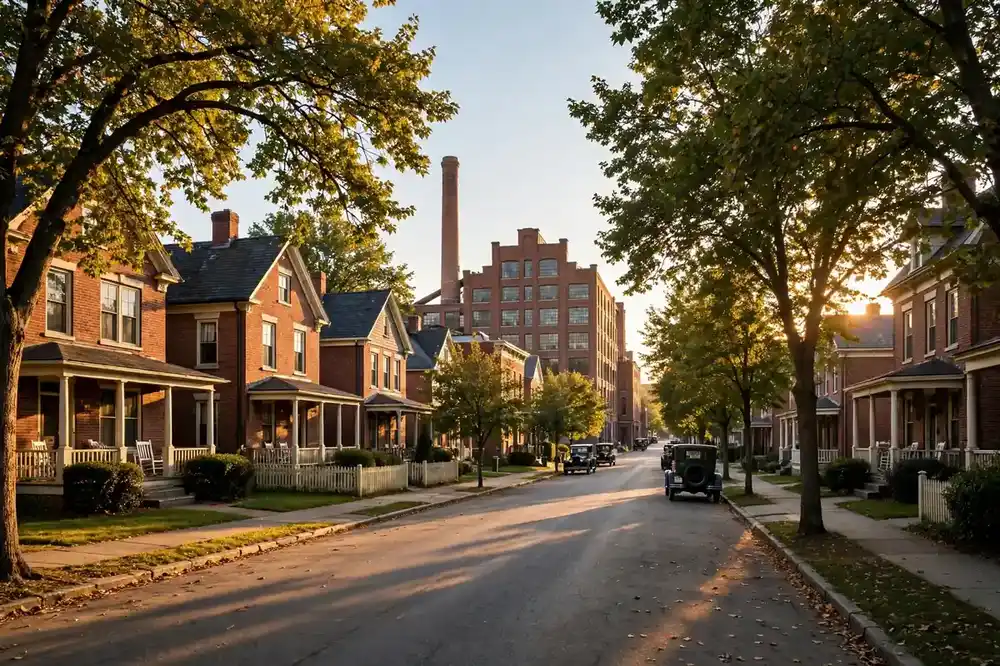
Harrisburg is the state capital, the Dauphin County seat, and a city of old houses on a river. The plumbing in those houses is as old as the houses themselves: galvanized steel supply lines and clay or cast-iron laterals installed when the median Harrisburg home was built in 1947, still in service generations later. The city's winters add the second half of the problem — around 101 nights a year at or below freezing, and freeze-thaw cycles that move the ground a little every year, shifting joints and stressing pipes. The result is a city where the most common plumbing calls are the ones old housing and cold winters produce together: burst pipes, frozen lines, sewer backups, and water heaters that fail on the coldest morning of the year.
The river shapes the work too. The Susquehanna runs along the city's western edge, and the water table across the river valley rises with spring thaw and heavy rain. Shipoke, the neighbourhood on the riverfront, sits entirely in the floodplain and has taken river water in 1972, 2004 and 2011, so basements and low pipe runs there have a long history of being soaked. Spring thaw brings melting snow and ice that overwhelm drainage, and a sump pump that has sat idle all winter is asked to work at full capacity on the first warm weekend. Across the city, the pattern is the same: old pipes, cold winters, and a river that keeps the ground wet.
What Harrisburg homes need most
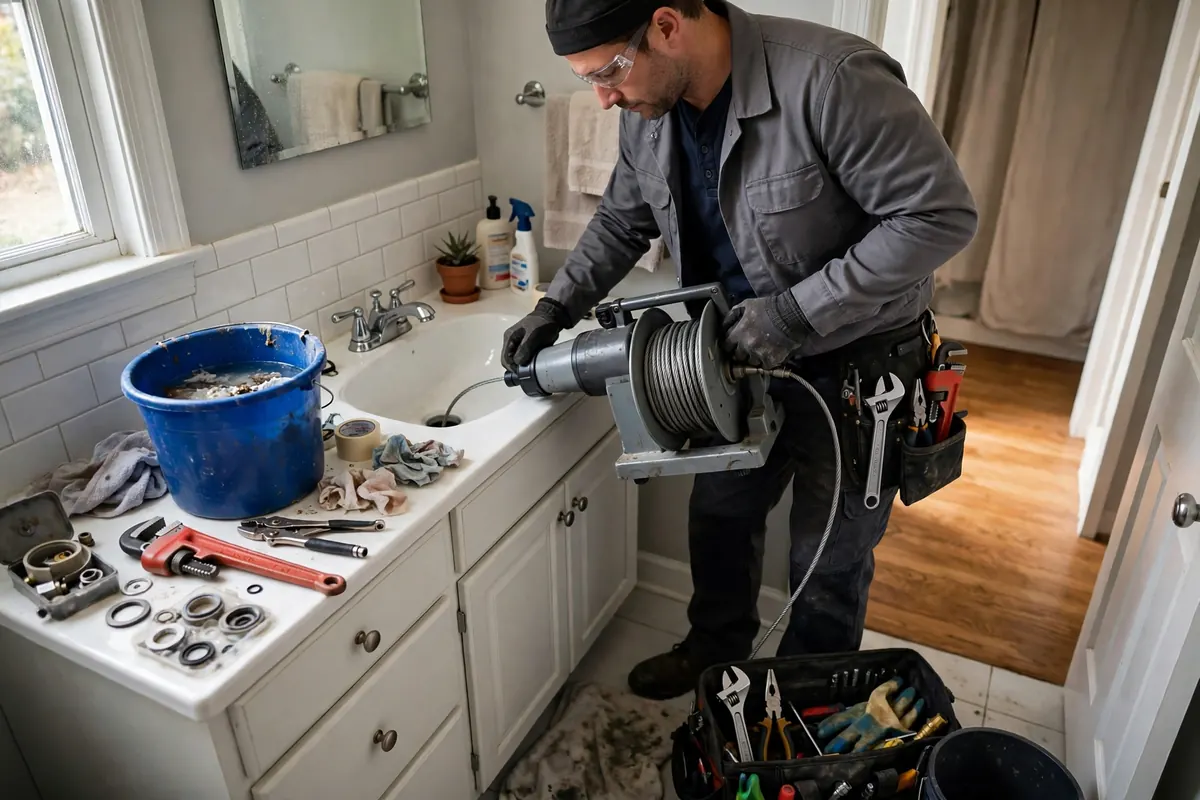
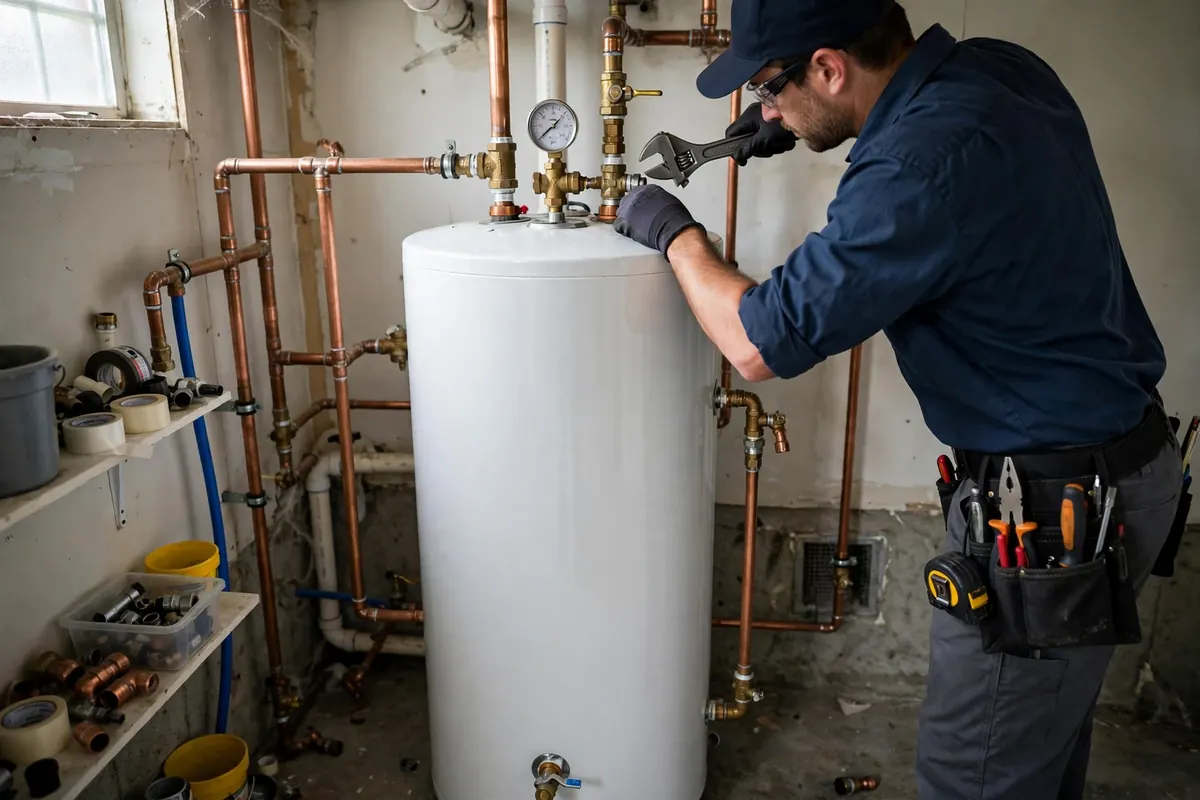
The most common calls in Harrisburg follow the housing. Burst pipes and frozen lines lead the winter list, because the city's rowhomes have kitchen and bathroom runs on exterior walls that were built before modern insulation, and the pipes in crawl spaces, attics and garages track outdoor temperatures. Sewer work leads the year-round list, because the clay laterals under Midtown, Uptown and Allison Hill have joints that have been open to tree roots for decades, and the cast-iron stacks inside the houses have been narrowing from the inside for generations. Water heater work follows the same age pattern: tanks that have never been flushed, anode rods that have never been checked, and heaters that fail on the coldest morning of the year.
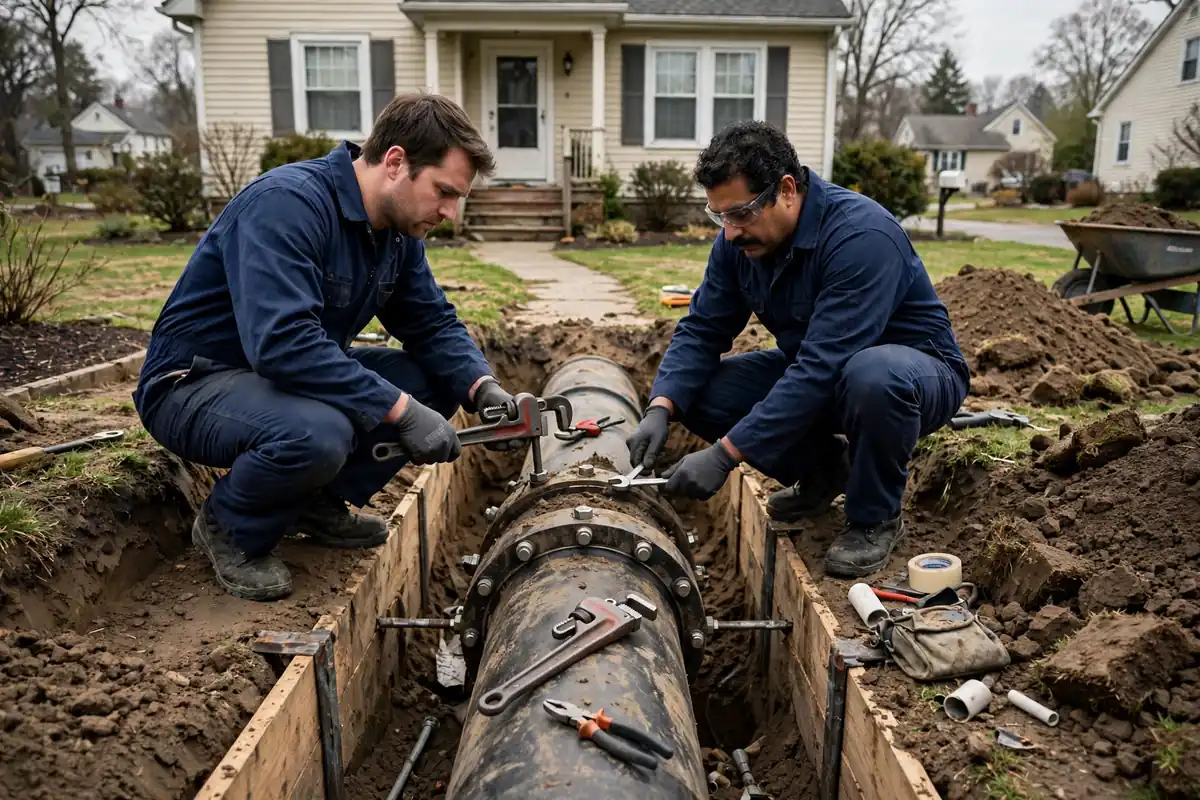
One local fact shapes every job in the city itself. Inside the City of Harrisburg, pipe installation or replacement needs a permit, and the work must be done by a city-registered master plumber — the Bureau of Codes handles permits. Capital Region Water owns the mains; the homeowner owns the service line from the main to the house and the sewer lateral to the main. Knowing who owns which side of the line matters when a break is at the street, because the repair responsibility changes at the property line. The service pages on this site explain each job in detail; this page is the local picture — the housing, the river, and the winters that shape them.
Neighbourhoods we serve in Harrisburg
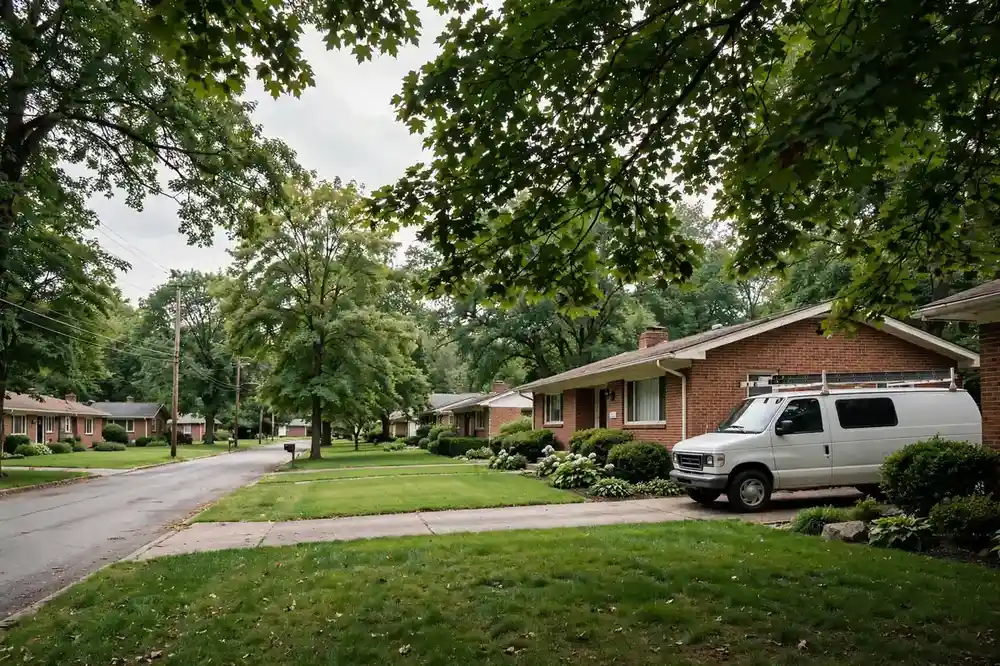
Midtown and Uptown carry the city's oldest rowhomes, with galvanized supply lines and clay laterals from the 1940s and earlier, running under front yards planted with mature street trees. Allison Hill's steep grades put laterals under extra stress where the ground settles, and its older homes have the same clay-lateral era as the rest of the city. Shipoke's floodplain history means basements and low pipe runs have been soaked repeatedly, and sump systems there work harder than anywhere else in the city. Hall Manor and Bellevue Park have post-war housing with utility-room plumbing and long exterior runs. Penbrook and Paxtang, the boroughs on the city's edge, carry the same housing era in a smaller scale. Colonial Park, Linglestown and Progress, the suburbs to the north and east, have the ranches and split-levels whose long laterals and utility-room heaters define the suburban call.
Downtown and the riverfront add a commercial layer: government offices, the Capitol complex, hospitals, hotels and restaurants along Front Street and Second Street, where the plumbing serves the public rather than a household. The industries pages on this site cover the commercial work — restaurants, offices, property managers and hotels — and the service area extends across the river to the West Shore and up the valley to the metro suburbs, each with its own page on this site.
Winter in Harrisburg: the freeze calendar
The freeze season in Harrisburg runs from late fall through early spring, and the pattern is not a single cold snap but a series of freeze-thaw cycles. Pipes sit at the edge of freezing for days, then a polar-vortex night pushes them over. The most dangerous night is not the coldest one — it is the night after a thaw, when the frozen pipe splits and the leak starts as the temperature rises. January 28, 2025 is the date that shows the pattern in one day: after a hard freeze, temperatures warmed, the frozen pipes thawed, and Harrisburg firefighters answered more than two dozen burst-pipe calls. The pipes had split overnight and started leaking as they warmed.
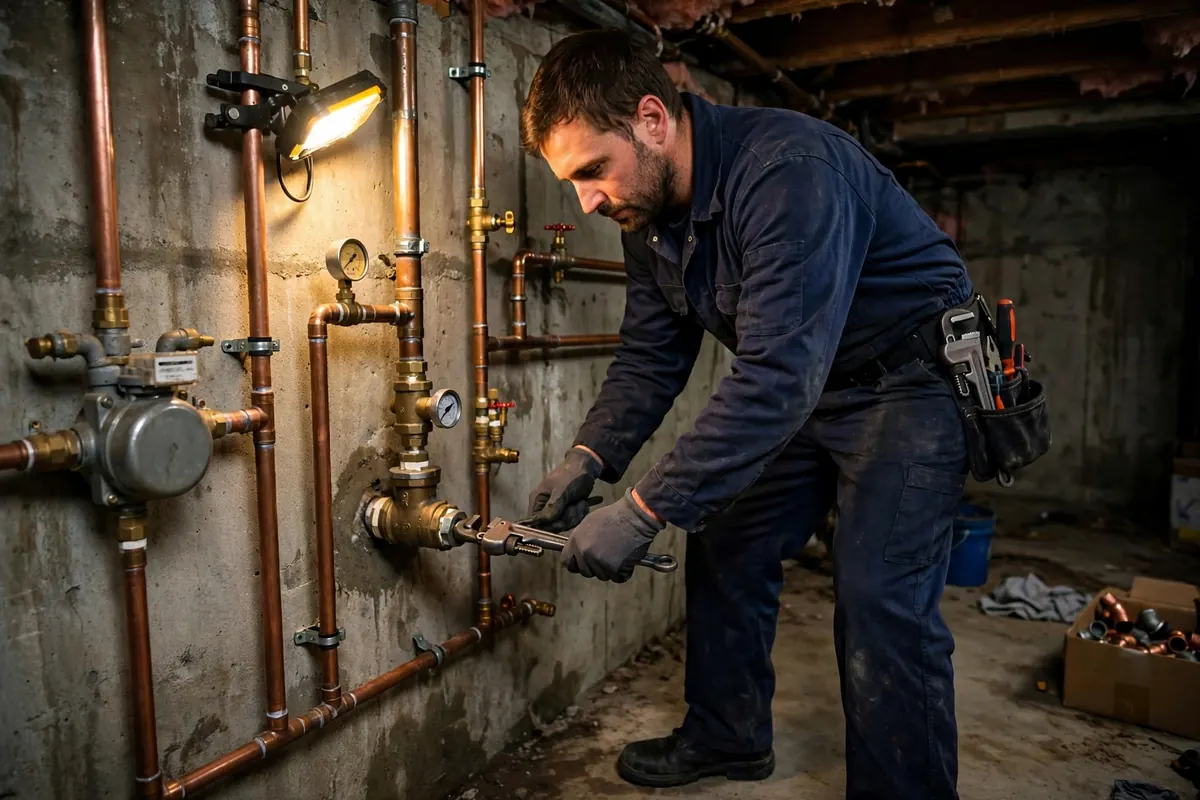
Preparation is a fall job, not a winter one. Insulating exposed pipes, disconnecting hoses from outdoor spigots, sealing the air leaks that let cold air reach pipe runs, and knowing where the main shutoff is — in most Harrisburg rowhomes it is in the basement on the front wall, where the water service enters from the street, close to the meter — are all October and November work. The winterizing guide in the blog walks through the full fall checklist, and the frozen pipe thawing page explains what to do when a pipe has already frozen.
The capital's plumbing, street by street
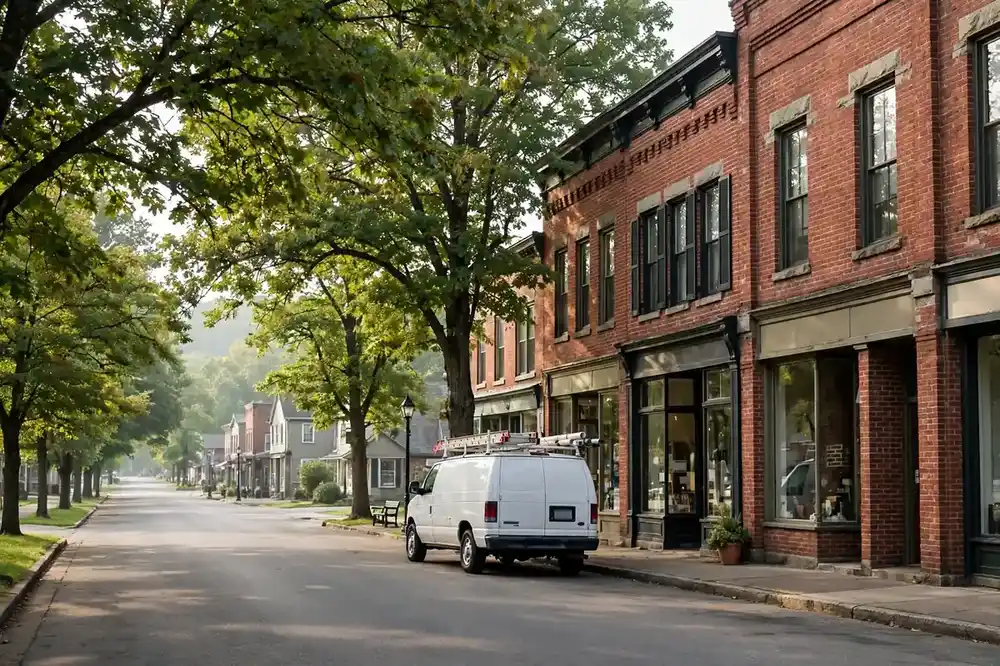
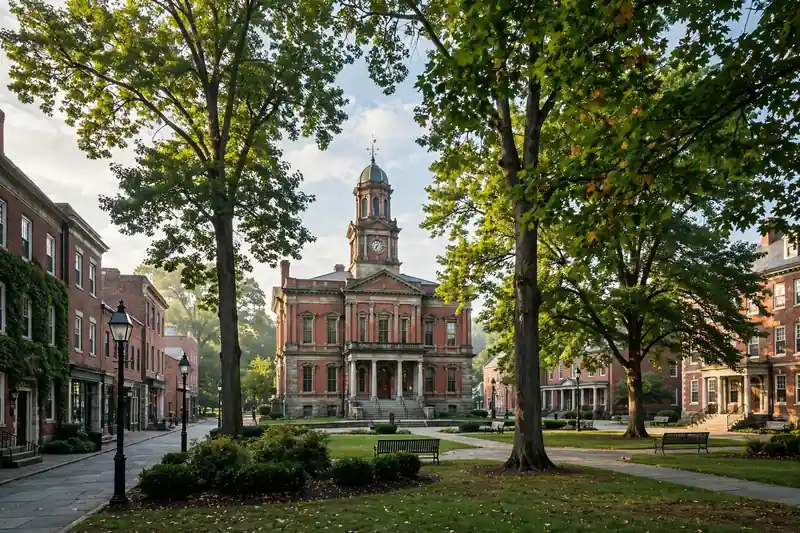
Downtown Harrisburg, around the Capitol complex, Front Street and Second Street, is government offices, hotels and restaurants as much as it is homes — and the plumbing there serves the public rather than a household. The Capitol area's buildings are a mix of historic structures with cast-iron drains and modern offices with commercial water heaters, and the work on them is planned around the working day rather than a household's routine. The riverfront hotels and restaurants along Front Street carry the hospitality load: guest-room fixtures, commercial water heaters, and kitchen drains that run all day. The Farm Show Complex, north of downtown, brings its own seasonal load when the events arrive and the buildings fill.
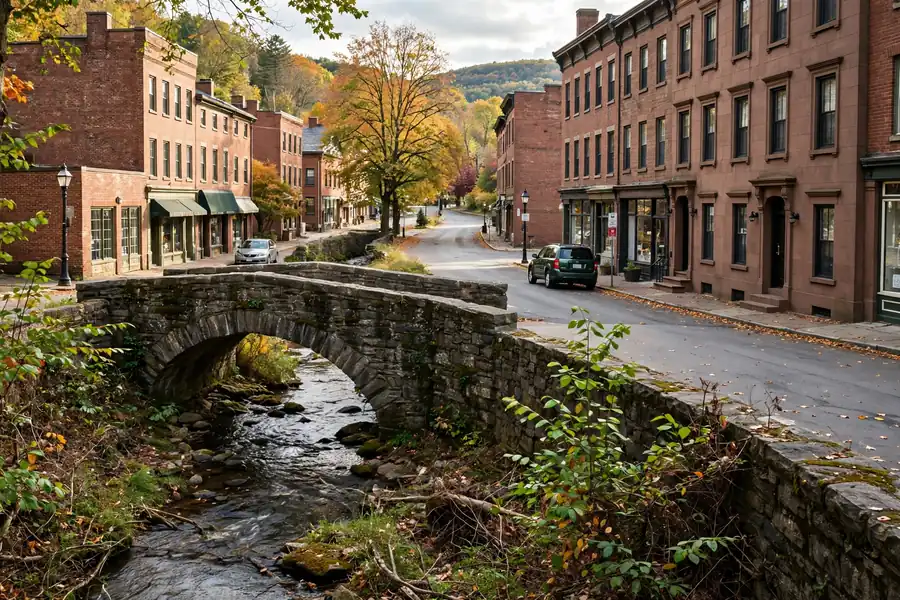
North of downtown, the residential city takes over: Midtown and Uptown with their rowhomes, Allison Hill with its steep grades, Hall Manor and Bellevue Park with their post-war housing, and the suburbs to the north and east — Colonial Park, Linglestown and Progress — with their ranches and split-levels. Each neighbourhood has its own plumbing pattern, and the areas pages on this site explain the metro's communities one by one. The common thread is the one this site is built on: old pipes, cold winters, and a river that keeps the ground wet — and a local professional who knows all three.
The river, the bridges, and the West Shore
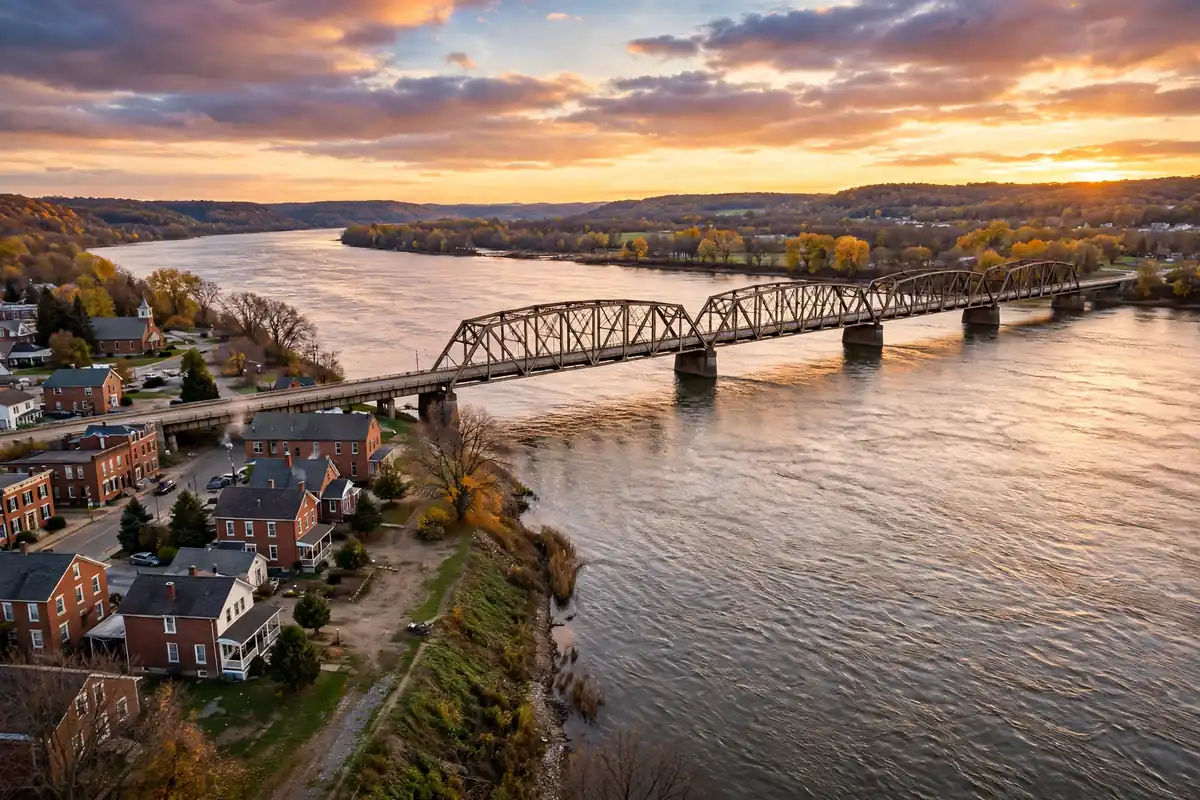
The Susquehanna is Harrisburg's western edge and its defining feature, and the bridges — the Harvey Taylor, the Market Street, the Walnut Street pedestrian bridge — tie the city to the West Shore towns that are part of its metro: Lemoyne, Camp Hill, New Cumberland, Enola and Mechanicsburg. The river's islands, including City Island with its ballpark, sit in the middle of the flow, and the riverfront — Riverfront Park, Front Street, the steps down to the water — is where the city meets the river. The water that makes the riverfront beautiful is the same water that keeps the valley's ground wet, and the basements along the river, in Shipoke most of all, have the longest history of being soaked. The city's plumbing is inseparable from its river, and the metro's plumbing is inseparable from the valley the river carved.
Plumbing services in Harrisburg, PA
Other communities we serve
Questions, answered
Am I responsible for the sewer line to the street?
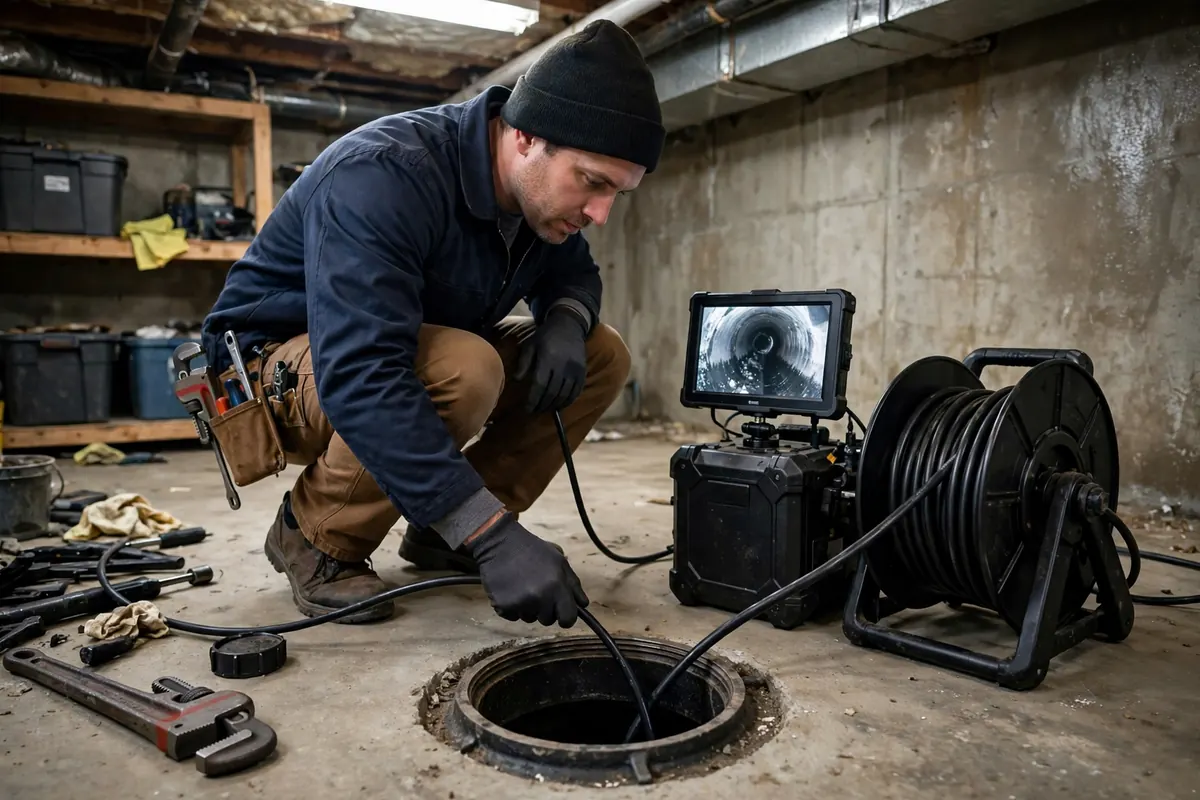
Yes. In Harrisburg the homeowner owns the lateral from the house to the municipal main, and Capital Region Water owns the mains. A failure in the lateral is the homeowner's repair, which is why a camera inspection before buying an older home matters.
Do I need a permit for plumbing work in Harrisburg?
Inside the City of Harrisburg, pipe installation or replacement needs a permit and the work must be done by a city-registered master plumber. The Bureau of Codes handles permits.
What makes Harrisburg winters hard on pipes?
Around 101 nights a year at or below freezing, and freeze-thaw cycles that push pipes to the edge for days before a cold night tips them over. The median home was built in 1947, so the pipes at risk are often galvanized steel in exterior walls that were never insulated to modern standards.
Where is the main water shutoff in a Harrisburg rowhome?
In most rowhomes and older borough houses it is in the basement on the front wall, where the water service enters from the street, close to the meter. In a post-war ranch it is more often in a utility room or near the water heater.
What neighbourhoods do you serve in Harrisburg?
Midtown, Uptown, Shipoke, Allison Hill, Hall Manor, Bellevue Park, Penbrook, Paxtang, Colonial Park, Linglestown and Progress — and the metro suburbs across the river and up the valley, each with its own page on this site.
Why is Shipoke prone to basement water?
Shipoke sits entirely in the Susquehanna floodplain and has taken river water in 1972, 2004 and 2011. Basements and low pipe runs there have a long history of being soaked, and sump systems work harder there than anywhere else in the city.
Need a plumber in Harrisburg? Call Now.
Talk with a local plumbing professional about your home. Hours: Mon–Fri 7:00 AM–10:00 PM ET · Sat 8:00 AM–10:00 PM ET · Sun 7:00 AM–9:00 PM ET.
Call NowGet in touch
Call Now from any page and you will be connected with a local plumbing professional serving Harrisburg and the surrounding metro. You can also reach us by email at hello@harrisburgplumbingpros.com.
Hours: Mon–Fri 7:00 AM–10:00 PM ET · Sat 8:00 AM–10:00 PM ET · Sun 7:00 AM–9:00 PM ET.
Call Now