Home › Services › Sewer Line Repair
Plumbing · Harrisburg, PASewer Line Repair in Harrisburg, PA
The sewer lateral is the one pipe in a house that nobody thinks about until it fails, and in Harrisburg it fails on a schedule set by the age of the housing stock. Sewer line repair in Harrisburg, PA covers the diagnosis and repair of the lateral that carries waste from the house to the municipal main — the clay tile and cast-iron lines installed under homes built in the 1940s, 1950s and 1960s, now at or past the end of their service life.
Talk with a local plumbing professional
Hours: Mon–Fri 7:00 AM–10:00 PM ET · Sat 8:00 AM–10:00 PM ET · Sun 7:00 AM–9:00 PM ET
Call NowWhat is sewer line repair?
A sewer lateral is a single pipe, usually four inches in diameter, running from the house to the street main. In Harrisburg's older homes it is clay tile in sections joined every few feet, or cast iron. Clay lasts for decades, but its joints open over time; cast iron corrodes from the inside and from the soil outside. Both materials are now old enough that failure is a matter of when, not whether, for the original line under a pre-1970 home.
Sewer line repair means fixing the pipe itself, not just clearing what is inside it. A cleared root mat will grow back. A repaired joint, a replaced section, or a relined lateral removes the cause. The repair is chosen by what the camera shows: the material, the location, the length of the damage, and whether the pipe has lost its slope.
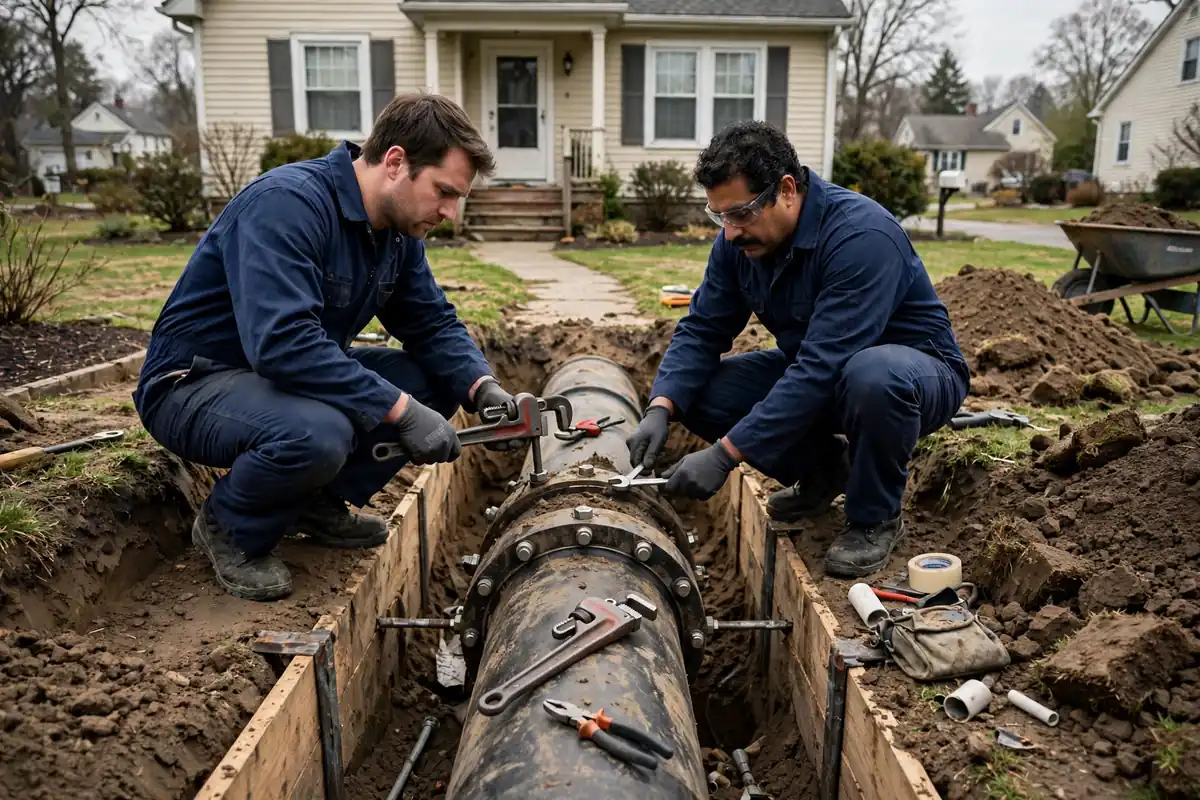
In Harrisburg the homeowner owns the lateral from the house to the main, so a lateral failure is the homeowner's repair, not the water authority's. Capital Region Water owns the mains; everything from the house to the main is on the property owner. That fact surprises many homeowners the first time a backup arrives, and it is worth knowing before the camera goes into the line.
This page explains how a lateral fails, how the failure is found, and what the repair options are — from a spot repair of one damaged section to a full replacement, including trenchless methods that avoid digging up the yard. The sewer camera inspection page explains the diagnostic step, and the trenchless sewer repair page covers the no-dig option in detail.
Call NowSigns you need sewer line repair
- Sewage backing up into the lowest fixture: A backup in a basement floor drain, a ground-floor tub or a shower is the clearest sign the lateral is blocked or collapsed. Water from anywhere in the house has nowhere to go, so it comes up through the lowest open point.
- Several drains slow at the same time: When the kitchen, the bathrooms and the laundry all slow together, the restriction is in the shared lateral, not in any one fixture. One slow drain is a fixture problem; all of them together is a lateral problem.
- A persistent sewer smell in the yard or basement: A smell of sewage in the yard, especially over the line of the lateral, or in the basement near the floor drain, can mean a cracked or separated joint is leaking into the soil or under the slab.
- A soggy patch or unusually green grass over the lateral: A lateral that leaks feeds the soil above it. A patch of yard that stays wet, or grass that grows faster and greener in a straight line from the house to the street, is following the path of a leaking pipe.
- Gurgling and bubbling across fixtures: Gurgling in a tub when the toilet flushes, or bubbling in a toilet when the washer drains, means air is trapped by a restriction downstream. When it happens across several fixtures, the restriction is in the lateral.
- Frequent clogs that return after clearing: A lateral that clogs, gets cleared, and clogs again within weeks or months has a structural cause — roots, a break, a belly, or an offset joint. Clearing treats the symptom; the pipe itself needs attention.
What causes it
- Tree root intrusion: Roots enter clay tile joints seeking water, then grow into a mat inside the pipe. The mat catches paper and waste, and the blockage grows. Root intrusion is the single most common cause of lateral failure in Harrisburg's older neighbourhoods, where mature street trees stand over clay laterals.
- Age and material failure: Clay tile cracks and shifts with ground movement; cast iron corrodes and scales until the wall thins and fails. A lateral installed in the 1940s has been in the ground for more than eighty years, and the materials were not designed for that span.
- Ground settlement and bellies: A section of lateral that settles loses its slope and holds water instead of draining it. Solids settle in the low spot, and the belly grows deeper as the pipe continues to settle. Heavy rain and freeze-thaw cycles in central Pennsylvania move the ground a little every year.
- Offset and separated joints: Ground movement, nearby excavation, or a heavy vehicle over the line can shift one section of pipe relative to the next. The offset catches waste and paper, and the gap lets soil in and sewage out.
- Grease and scale buildup: In cast-iron laterals, internal corrosion narrows the pipe from the inside. Combined with grease from the kitchen, the effective diameter can shrink by half over decades, and the line clogs under normal use.
How the work is done
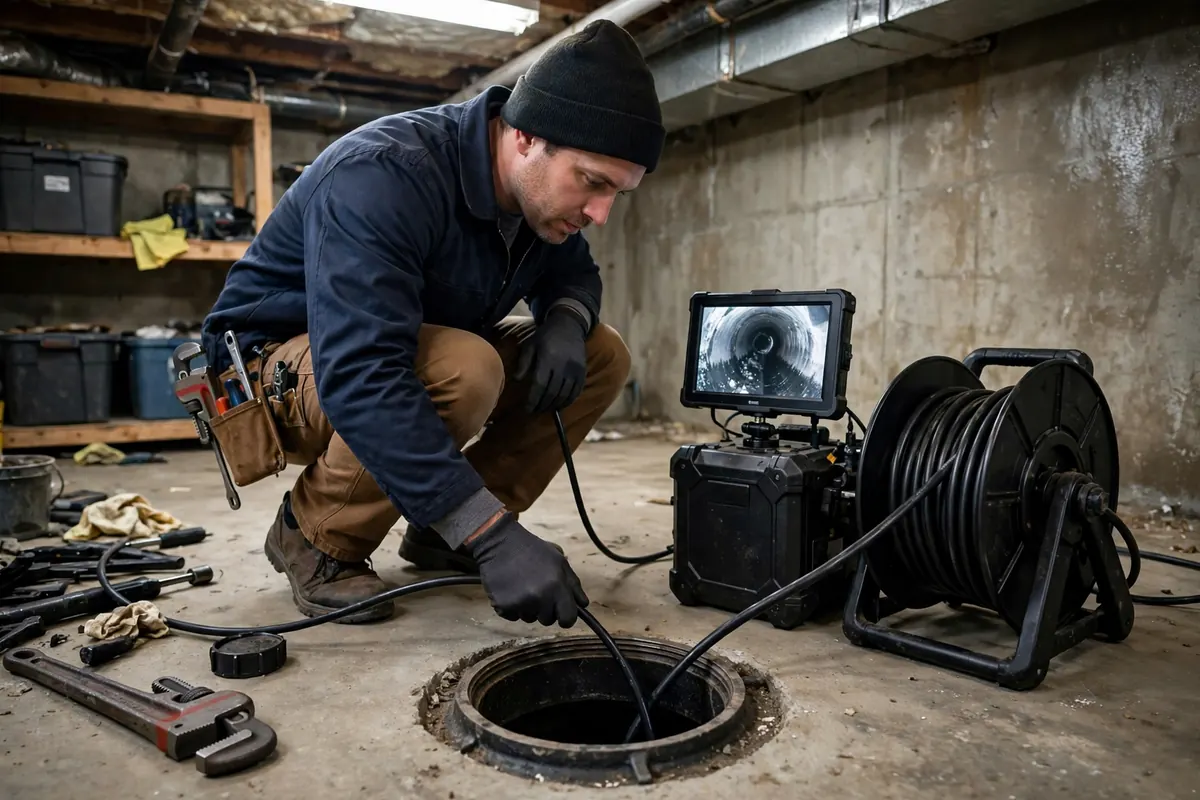
- Camera inspection first: A lateral repair starts with a camera run from a cleanout or a pulled toilet. The camera records the material, the joints, the breaks, the bellies and the exact distance of each problem from the access point. No excavation starts on a guess.
- Locate the problem from the surface: A transmitter on the camera head lets the crew mark the exact location and depth of each defect on the surface above. The dig, if one is needed, starts at the marked point rather than at a trench across the yard.
- Choose the repair by the damage: A single bad joint or a short broken section is a spot repair. A long run of damaged pipe, or a line with multiple failures, is a full replacement or a relining. The choice is made from the camera record, not from the age of the house alone.
- Repair or replace: A spot repair replaces the damaged section with new pipe and proper bedding. A full replacement lays a new lateral from the house to the main. A trenchless relining inserts a new pipe inside the old one where the old pipe can still serve as a host. The trenchless page explains when each fits.
- Test and restore: After the repair the line is run at full flow and camera-checked again, so the repair is proven before the ground is restored. The surface is backfilled, compacted, and left ready for the homeowner to restore the lawn or paving.
What the service includes
- Sewer camera inspection and surface location of defects
- Root removal and lateral cleaning before repair
- Spot repair of a broken joint or collapsed section
- Full lateral replacement from house to main
- Trenchless pipe relining where the old pipe can host it
- Cleanout installation for future access
- Flow testing and a second camera check after the repair
- Permit handling for work inside the City of Harrisburg
Your options
Spot repair
One damaged section is excavated and replaced. This fits a single break, a single bad joint, or a short collapsed run in an otherwise sound lateral. It is the smallest excavation that fixes the actual problem.
Full lateral replacement
The entire lateral from the house to the main is replaced. This fits a line with multiple failures, a line whose material has reached the end of its life, or a line that has lost its slope along its length.
Trenchless relining
A new pipe is formed inside the old one, sealing joints and cracks without a trench. It fits a lateral that is still round enough to host a liner and where the damage is cracking and joint failure rather than a full collapse.
Repair or replace?
The camera decides. A lateral with one broken joint and otherwise sound clay is a spot repair — digging up the whole line would be wasteful. A lateral with roots at every joint, a belly in the middle, and a collapsed section near the street is a replacement, because repairing one failure leaves two more in place. The age of the material matters too: a cast-iron lateral that is scaling along its whole length will keep narrowing after any single repair, while a clay lateral with a single offset can serve for years after that joint is fixed. The honest answer is always tied to the camera record, and a provider who recommends a full replacement without a camera record has skipped the diagnostic step.
Can I do this myself?
There is no homeowner version of lateral repair. The work is underground, it needs a camera to find the failure, it needs excavation or trenchless equipment to fix it, and inside the City of Harrisburg it needs a permit and a city-registered master plumber. What the homeowner can do is notice the early signs — the slow drains, the gurgling, the wet patch in the yard — and get a camera inspection before the partial blockage becomes a full backup into the basement. A camera inspection is the simplest step in the whole sequence, and it is the step that keeps a spot repair from becoming a full replacement.
Plumbing in Harrisburg: the local picture
Harrisburg's lateral problem is a housing-age problem. The median home was built in 1947, and in Midtown, Uptown, Allison Hill and the older borough streets the original clay or cast-iron lateral is still in the ground. Those lines run under front yards planted with mature maples and oaks, and every joint is an invitation to roots. The Susquehanna valley's freeze-thaw cycles move the ground a little each year, shifting joints and deepening bellies. In Shipoke, where the floodplain has taken river water in 1972, 2004 and 2011, laterals have been soaked and shifted more than once.
The metro repeats the pattern at a different scale. Mechanicsburg and Camp Hill have post-war ranches with long laterals to the street, Carlisle's borough homes sit on the same clay era, and Hershey's early twentieth-century homes near the factory carry the same laterals as the city's. Across the metro, a lateral that has never been camera-inspected is an unknown, and the first backup is usually the first time anyone has looked inside it.
Mistakes to avoid
- Clearing without a camera look: A lateral that is cleared every few months without a camera inspection is being treated for the symptom while the cause — roots, a break, a belly — keeps growing. The camera is what turns a recurring bill into a repair plan.
- Waiting for a full backup: A lateral rarely fails without warning. Slow drains across the house, gurgling, and a wet patch in the yard are the warnings. A full backup into the basement is the failure, and it costs far more to clean up than a planned repair.
- Planting over the lateral: Trees and large shrubs planted over the lateral line send roots straight into the joints. Knowing where the lateral runs before planting is a simple step that saves a repair.
- Ignoring the yard: A soggy patch or a strip of fast-growing grass over the lateral is the pipe telling you it is leaking. It is easy to dismiss as a drainage quirk, and it is the earliest visible sign of a lateral failure.
- Assuming the city owns the lateral: In Harrisburg the homeowner owns the lateral from the house to the main. Waiting for the water authority to fix a lateral problem is waiting for a repair that is not theirs to make.
What to have ready before you call
- Note which fixtures are affected and whether the problem is worse in wet weather
- Find the cleanout if you know where it is, and clear access to it
- Note any wet patches or fast-growing grass in a line from the house to the street
- Keep a record of how often the line has been cleared and what was found
- Know the age of the house if you can — the lateral is usually the same age
What shapes the scope of the work
Lateral work varies more than any other plumbing job, because the variables are underground. The length of the lateral, its depth, the material, the number of failures, the access for excavation, and whether the line runs under a driveway, a patio or a mature tree all shape the scope. A spot repair at shallow depth in an open lawn is a different job from a full replacement under a paved driveway, and a trenchless relining avoids excavation altogether where it fits. The camera inspection is what sets the scope: it shows the length of the damage, the depth, and the condition of the rest of the line, and the repair is priced on that record rather than on a guess from the surface.
How to choose a provider
Ask to see the camera record. A provider who can show you the inside of your lateral — the roots, the break, the belly, with distances marked — is giving you the evidence for the repair they recommend. Ask whether the repair is a spot fix, a full replacement, or a relining, and why that option fits your pipe rather than the others. Ask about the permit, since work inside the City of Harrisburg needs one, and ask what the surface restoration covers after the excavation. The provider who answers those questions with the camera record in hand is the one working from evidence.
Other plumbing services
Questions, answered
Who owns the sewer lateral in Harrisburg?
The homeowner owns the lateral from the house to the municipal main. Capital Region Water owns the mains. A lateral failure is the homeowner's repair.
How do I know if my sewer line needs repair or just cleaning?
A camera inspection decides. A sound pipe with buildup needs cleaning. A pipe with a break, a collapse, a belly or roots at every joint needs repair. A line that clogs again soon after clearing has a structural cause.
What is trenchless sewer repair?
Trenchless repair forms a new pipe inside the old one, sealing joints and cracks without digging a trench across the yard. It fits a lateral that is still round enough to host a liner. The trenchless page on this site explains it in detail.
How long does a clay sewer lateral last?
Clay tile can serve for many decades, but its joints open over time and roots enter through them. A lateral installed in the 1940s has been in the ground for more than eighty years, and in Harrisburg most original laterals of that era are at or past the end of their service life.
Why is grass greener in a line across my yard?
A leaking lateral feeds the soil above it. A strip of faster-growing, greener grass running from the house toward the street follows the path of the lateral, and it is an early visible sign of a leak.
Do I need a permit for sewer line work in Harrisburg?
Inside the City of Harrisburg, pipe installation or replacement needs a permit and the work must be done by a city-registered master plumber. The Bureau of Codes handles permits.
Can tree roots really break a sewer pipe?
Roots enter through the joints of clay tile, then grow into a mat inside the pipe. The mat catches paper and waste, and the pressure of growing roots can crack and shift the pipe. It is the most common cause of lateral failure in Harrisburg's older neighbourhoods.
What happens if I ignore a slow sewer line?
A partial blockage becomes a full backup, usually into the lowest fixture in the house — a basement floor drain or a ground-floor tub. A backup is a health hazard and a cleanup job on top of the repair.
Need sewer line repair? Call Now.
Talk with a local plumbing professional about your home. Hours: Mon–Fri 7:00 AM–10:00 PM ET · Sat 8:00 AM–10:00 PM ET · Sun 7:00 AM–9:00 PM ET.
Call NowGet in touch
Call Now from any page and you will be connected with a local plumbing professional serving Harrisburg and the surrounding metro. You can also reach us by email at hello@harrisburgplumbingpros.com.
Hours: Mon–Fri 7:00 AM–10:00 PM ET · Sat 8:00 AM–10:00 PM ET · Sun 7:00 AM–9:00 PM ET.
Call Now