Home › Services › Water Heater Repair
Plumbing · Harrisburg, PAWater Heater Repair in Harrisburg, PA
No hot water on a cold Harrisburg morning is the kind of problem that rearranges the whole day. Water heater repair in Harrisburg, PA covers the diagnosis and repair of tank water heaters that have stopped heating, started leaking, started making noise, or started delivering water that is never quite hot enough. This page explains how a tank heater works, what fails in it, and how the repair-or-replace decision is made.
Talk with a local plumbing professional
Hours: Mon–Fri 7:00 AM–10:00 PM ET · Sat 8:00 AM–10:00 PM ET · Sun 7:00 AM–9:00 PM ET
Call NowWhat is water heater repair?
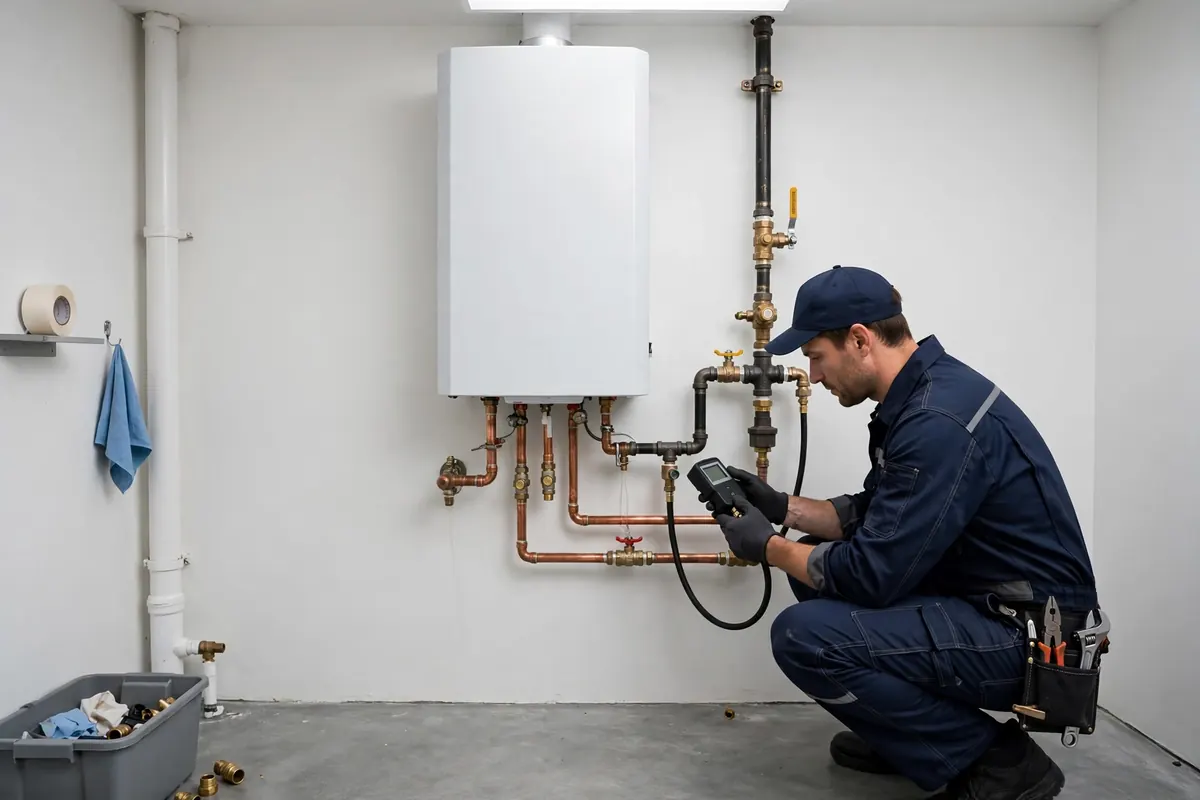
A tank water heater stores water in an insulated steel tank and keeps it at temperature with a gas burner or electric elements. Cold water enters through a dip tube to the bottom of the tank, hot water leaves from the top, and a thermostat holds the temperature steady. A glass lining and a sacrificial anode rod protect the steel from corrosion, and a temperature-and-pressure relief valve protects the tank from overpressure. When any of those parts fails, the symptoms show up at the tap.
Repair covers the parts that can be replaced without replacing the tank: thermostats, heating elements, gas control valves, thermocouples and igniters, dip tubes, relief valves, and the anode rod. It also covers sediment flushing, which restores heating efficiency in a tank that has filled with mineral deposits. What repair cannot do is fix a tank wall that is leaking. Once the steel itself has corroded through, the tank is finished.
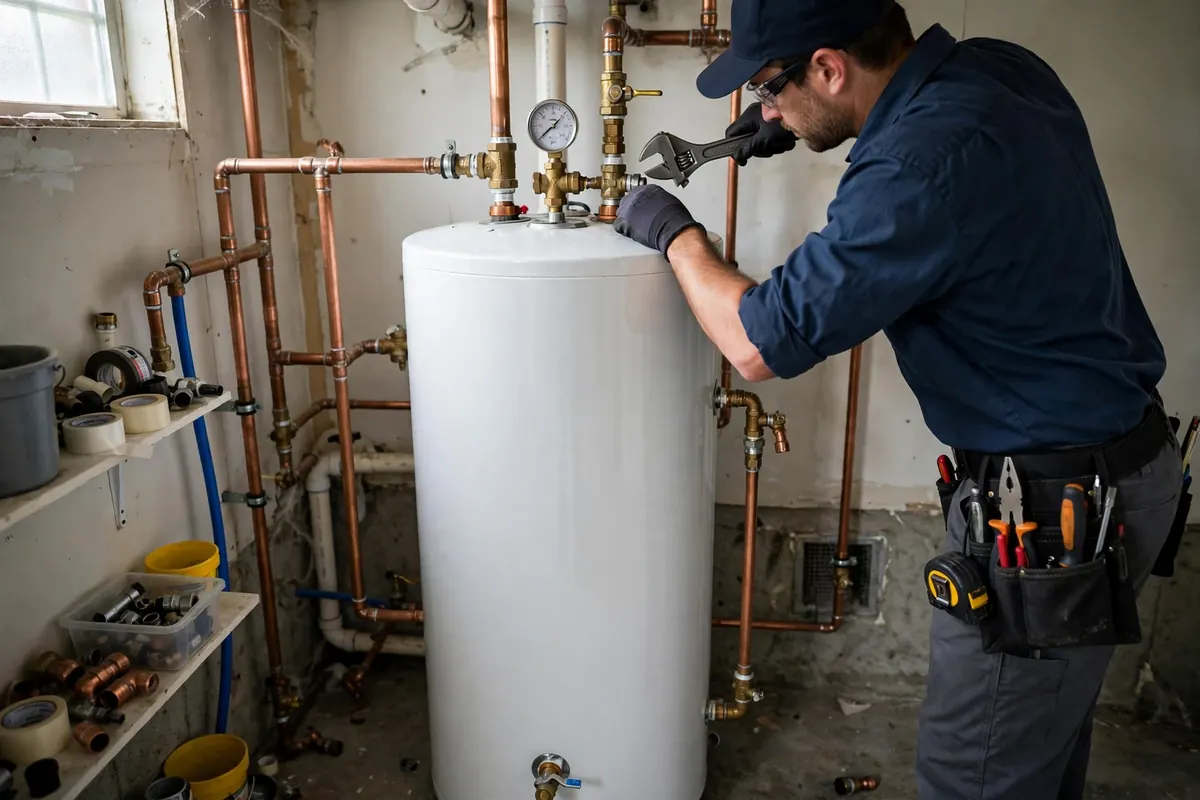
A tank water heater is a simple machine with a hard life. It holds forty or fifty gallons of water at temperature around the clock, in a steel tank that is constantly corroding from the inside, fed by central Pennsylvania water that leaves sediment behind. The heater's parts — the thermostat, the heating elements or burner, the dip tube, the anode rod, the relief valve — each have a service life, and they fail one at a time. Most heaters do not die suddenly; they give weeks of warning in the form of noise, rust-coloured water, or water that runs out sooner than it used to.
The repair question is always the same: is the failed part replaceable, or has the tank itself failed? A failed part is a repair. A tank leaking through its wall is a replacement. Everything on this page is built around that distinction.
Call NowSigns you need water heater repair
- No hot water at all: A heater that delivers only cold water has lost its heat source: a tripped breaker or failed element on an electric heater, or a pilot, thermocouple or gas control failure on a gas heater. If the whole house is cold at every tap, the heater is the problem, not a fixture.
- Hot water that runs out too fast: A shower that goes cold halfway through usually means a broken dip tube — cold water is mixing at the top of the tank instead of entering at the bottom — or a failed lower element that leaves half the tank unheated. Sediment can do the same by displacing water in the tank.
- Rust-coloured or smelly hot water: Rust colour only in the hot water points to corrosion inside the tank or a depleted anode rod. A rotten-egg smell in hot water comes from bacteria reacting with the anode rod in the tank. Both are signs the tank's protection is failing.
- Popping, rumbling or banging from the tank: Sediment that has settled on the bottom of the tank traps water beneath it, and the water flashes to steam with a popping or rumbling sound. The noise means the tank is working harder than it should, and the sediment is insulating the bottom from the burner or element.
- Water pooling around the base: Water at the base of the heater can come from a fitting, a relief-valve pipe, or the tank itself. A fitting leak is a repair. A tank leak — water seeping from the tank wall or the base seam — means the tank has failed and needs replacement.
- The relief valve discharging: A temperature-and-pressure relief valve that discharges water, or that drips constantly, is responding to pressure or temperature it should not be seeing. It can mean a failed thermostat, a closed system with no expansion tank, or a valve that has failed open.
What causes it
- Sediment buildup: Central Pennsylvania water leaves mineral sediment in the tank, and the sediment settles on the bottom where it insulates the water from the heat source. The heater runs longer, uses more energy, and the bottom of the tank overheats. A tank that is never flushed accumulates sediment year after year.
- Anode rod depletion: The anode rod is a magnesium or aluminium rod inside the tank that corrodes so the steel does not have to. Once the rod is consumed, the tank wall starts corroding. Most rods last several years, and a heater that has never had its rod checked is running unprotected.
- Heating element failure: Electric heaters use two elements, upper and lower. When the lower element fails, only the top half of the tank heats, and hot water runs out fast. When the upper element fails, the heater may deliver no hot water at all. Elements fail from age and from sediment burial.
- Thermostat and control failure: A thermostat that sticks or drifts delivers water that is too hot, too cold, or inconsistent. On a gas heater, a failed gas control valve or thermocouple can shut the burner down entirely or leave the pilot out.
- Tank corrosion: The glass lining inside a steel tank eventually cracks, and the exposed steel corrodes. The corrosion starts as rust-coloured water and ends as a leak through the tank wall. At that point the tank cannot be repaired.
How the work is done
- Check the basics first: The visit starts with the simple checks: power or gas to the heater, the breaker, the pilot, the thermostat setting, and whether the problem is at every tap or only one. A single cold tap is a fixture problem; every tap cold is a heater problem.
- Test the components: The thermostat, elements, gas control and relief valve are tested in turn. An element is tested for continuity, a gas control for proper operation, a thermostat for accurate switching. Testing finds the failed part instead of replacing parts at random.
- Flush the sediment: Where sediment is the problem, the tank is flushed: the water is drained, the sediment is washed out, and the flow is restored. A flush also shows how much sediment the tank has been carrying, which tells the owner how the heater has been treated.
- Replace the failed part: A failed element, thermostat, dip tube, relief valve or anode rod is replaced with the correct part for the heater model. The repair is tested at full draw — a shower's worth of hot water, not a tap trickle — before the visit ends.
- Advise on the tank itself: If the tank is leaking through its wall, or if the corrosion is advanced, the honest advice is replacement, not another repair. The water heater replacement page explains the options and the decision in detail.
What the service includes
- Diagnosis of no-hot-water, low-hot-water and noisy-heater problems
- Heating element and thermostat replacement
- Gas control valve, thermocouple and igniter repair
- Dip tube replacement
- Temperature-and-pressure relief valve replacement
- Anode rod inspection and replacement
- Sediment flushing and tank draining
- Leak isolation — fitting leak versus tank leak
- Honest repair-or-replace advice from the tank's condition
Your options
Component repair
A failed element, thermostat, dip tube or relief valve is replaced and the heater returns to service. This is the right choice when the tank itself is sound and the failed part is the only problem.
Sediment flush and service
The tank is flushed, the anode rod is checked, and the heater is returned to efficient operation. This is the right choice for a noisy heater, a heater that runs out of hot water early, or a heater that has never been serviced.
Tank replacement
When the tank wall is leaking or the corrosion is advanced, the heater is replaced rather than repaired. The replacement page covers sizing, fuel type and the installation sequence.
Repair or replace?
The age and the tank wall decide. A heater under ten years old with a failed element or thermostat is a repair — the tank has years of service left and the part is replaceable. A heater over twelve years old with rust-coloured water, a depleted anode rod and a rumbling tank is a replacement waiting to happen, and repairing one part only delays the tank failure by months. The bright line is the tank wall: a leak through the wall is a replacement, full stop, because a steel tank cannot be patched from the inside. The replacement page walks through sizing and fuel choices for the new heater.
Can I do this myself?
A homeowner can safely check the breaker, the thermostat setting, and whether the pilot is lit — and can shut off the water to a leaking heater. Beyond that, a water heater is a pressure vessel with gas or 240-volt electricity, and it deserves a professional. Draining a tank without knowing the relief valve works, or relighting a gas burner without checking the vent, can turn a repair into a hazard. The one homeowner job that matters most is the annual flush, and even that is worth doing with guidance the first time, because a tank that has never been flushed can release a surprising amount of sediment.
Plumbing in Harrisburg: the local picture
Harrisburg's water heaters work harder than most. The city's winters mean the incoming cold water is colder, so the heater works longer to bring it to temperature, and the freeze-thaw season puts the heater's own pipes at risk in unheated utility rooms and basements. The housing stock adds a second factor: many heaters sit in basements of homes built in the 1940s and 1950s, where the heater shares space with an old boiler or furnace and where the venting and gas lines are as old as the house. A heater installed in a damp Shipoke basement, where the floodplain has taken river water in 1972, 2004 and 2011, faces corrosion from the outside as well as the inside.
In the suburbs the pattern shifts but does not disappear. Mechanicsburg and Camp Hill ranches have heaters in utility rooms and garages, where a winter night can freeze the lines around the heater itself. Hershey's older homes carry heaters that have been replaced piecemeal over decades, sometimes with the wrong size for the household. Across the metro, the most common heater story is the same: a tank that has never been flushed, an anode rod that has never been checked, and a failure that arrives on the coldest morning of the year.
Mistakes to avoid
- Never flushing the tank: Sediment is the slow killer of tank heaters in central Pennsylvania. A tank that is never flushed loses capacity, runs louder, and fails earlier. An annual flush is the single most useful maintenance step.
- Ignoring rust-coloured hot water: Rust colour only in the hot water is the tank telling you its protection is failing. It is the warning before the leak, and it is worth a call while the tank is still holding water.
- Turning the thermostat up to fix low hot water: A heater that runs out of hot water early has a failed dip tube, a failed element, or sediment — not a thermostat set too low. Turning the temperature up only makes the water dangerously hot at the tap.
- Replacing parts at random: A heater that delivers no hot water can have a failed element, a failed thermostat, or a tripped breaker. Testing finds the failed part; replacing parts in sequence costs more than the diagnosis.
- Keeping a leaking tank in service: A tank that is leaking through its wall will not heal. The leak grows, and the water it releases goes onto the floor. A tank leak is a replacement, not a repair to schedule later.
What to have ready before you call
- Note whether the problem is at every tap or only one
- Note the heater's age if you know it, and whether it is gas or electric
- Note any noise, rust colour, or smell in the hot water
- Clear access to the heater and the shutoff valve
- Note whether the relief valve has discharged water recently
What shapes the scope of the work
Heater work varies with the heater type, the failed part, and the access. An element replacement on an accessible electric heater is a different job from a gas control valve on a heater in a cramped utility room, and a tank replacement involves the new heater, the venting, the gas or electrical connection, and the disposal of the old tank. The factors that shape the scope are the heater's age and condition, the fuel type, the size needed for the household, and whether the venting and connections meet current standards. The professional's job is to test first and recommend from what the tests show, not from the age on the label alone.
How to choose a provider
Ask whether the provider will test the heater before recommending a replacement. A provider who tests the elements, the thermostat and the gas control, and who can show you the sediment that came out of the flush, is diagnosing rather than selling. Ask whether the tank wall is sound — that is the question that decides repair versus replacement — and ask what size heater the household actually needs, since a heater that is too small will always run out of hot water and a heater that is too large wastes energy. The answers should come from the heater in front of them, not from a script.
Other plumbing services
Questions, answered
Why do I have no hot water in the morning?
On an electric heater, a failed element or a tripped breaker. On a gas heater, a pilot, thermocouple or gas control failure. If every tap is cold, the heater has lost its heat source.
Why does my hot water run out so fast?
A broken dip tube lets cold water mix at the top of the tank, or a failed lower element leaves half the tank unheated. Sediment displacing water in the tank can do the same.
Why is my hot water rust-coloured?
Rust colour only in the hot water points to corrosion inside the tank or a depleted anode rod. It is the warning before a tank leak, and it is worth a call while the tank still holds water.
What is the popping noise from my water heater?
Sediment on the bottom of the tank traps water beneath it, and the water flashes to steam with a popping or rumbling sound. The tank needs flushing, and the sediment is a sign it has not been serviced.
Can a leaking water heater be repaired?
A leak from a fitting or a relief valve can be repaired. A leak through the tank wall cannot — the tank has failed and needs replacement.
How often should a water heater be flushed?
Once a year is the standard for central Pennsylvania water, which leaves mineral sediment behind. A tank that has never been flushed will release a surprising amount of sediment at its first flush.
Should I repair or replace my old water heater?
A heater under ten years old with a failed part is a repair. A heater over twelve years old with rust-coloured water and a rumbling tank is a replacement waiting to happen. A tank leaking through its wall is always a replacement.
Why does my hot water smell like rotten eggs?
Bacteria in the tank react with the anode rod and produce a sulphur smell in hot water. It is a tank issue, not a water-supply issue, and it is fixed by servicing the heater.
Need water heater repair? Call Now.
Talk with a local plumbing professional about your home. Hours: Mon–Fri 7:00 AM–10:00 PM ET · Sat 8:00 AM–10:00 PM ET · Sun 7:00 AM–9:00 PM ET.
Call NowGet in touch
Call Now from any page and you will be connected with a local plumbing professional serving Harrisburg and the surrounding metro. You can also reach us by email at hello@harrisburgplumbingpros.com.
Hours: Mon–Fri 7:00 AM–10:00 PM ET · Sat 8:00 AM–10:00 PM ET · Sun 7:00 AM–9:00 PM ET.
Call Now