Home › Services › Leak Detection
Plumbing · Harrisburg, PALeak Detection in Harrisburg, PA
A leak you can see is a repair. A leak you cannot see is a search. Leak detection in Harrisburg, PA is the service that finds hidden water leaks — inside walls, under floors, under a slab, or underground between the house and the street — using instruments rather than demolition. This page explains how a hidden leak is found, what the signs are, and what happens once the location is known.
Talk with a local plumbing professional
Hours: Mon–Fri 7:00 AM–10:00 PM ET · Sat 8:00 AM–10:00 PM ET · Sun 7:00 AM–9:00 PM ET
Call NowWhat is leak detection?
Leak detection uses instruments to find water that cannot be seen. Acoustic listening equipment hears the hiss of water escaping a pressurised line through a wall or a slab. Thermal imaging shows the warm or cool patch a leak creates in a floor or wall. A pressure test isolates which line is losing water. A moisture meter maps how far the water has spread. Used together, these tools narrow a leak to a small area before any opening is made.
Detection covers three kinds of hidden leak. A supply-line leak is pressurised water escaping from a hot or cold line inside a wall, under a floor, or under a slab. A slab leak is a supply line leaking under the concrete floor, common in homes built on a slab. A service-line leak is water escaping from the line between the street main and the house, underground in the front yard. Each is found differently, and each is repaired differently.

Hidden leaks are the most expensive kind, not because the repair is large but because the leak runs for weeks before anyone notices. A pinhole in a copper line inside a wall can drip for a month before the stain appears on the ceiling below. A slab leak can run under the floor for a season before the floor warms or the bill jumps. In Harrisburg's older homes, where galvanized and copper lines run through walls and under slabs installed generations ago, a hidden leak is a matter of time rather than chance.
The goal of detection is precision: finding the leak within inches, so the repair opens the smallest possible area. A plumber who opens walls at random is guessing. A leak detection visit is the opposite of guessing — it is a measurement.
Call NowSigns you need leak detection
- A water bill that jumps without explanation: A bill that rises sharply with no change in household use is the classic sign of a hidden leak. A supply-line leak can lose hundreds of gallons a day without any visible water, and the meter is often the first to notice it.
- A warm spot on the floor: A warm patch on a floor, especially over a slab, can mean a hot-water line is leaking underneath. The heat from the leaking water warms the floor above it, and the patch stays warm even when the heating is off.
- A damp patch, stain or bubbling paint: A stain on a ceiling or a wall, paint that bubbles or peels, or drywall that feels soft to the touch means water is moving inside the structure. The visible stain is usually below or beside the actual leak, because water follows gravity and framing.
- The sound of running water when everything is off: A hiss or the sound of running water inside a wall when every tap is closed and no appliance is running is water escaping from a pressurised line. Turn everything off and listen at the wall — the sound is the leak.
- Low water pressure at every tap: A gradual drop in pressure across the whole house, with no work on the supply, can mean a supply line is leaking enough water to reduce the pressure at the taps. One tap low is a fixture problem; every tap low is a system problem.
- A meter that runs with everything off: Shut off every tap and appliance, then watch the water meter. If the meter is still moving, water is leaving the system somewhere it should not be. That test is the simplest leak check a homeowner can do.
What causes it
- Corrosion pinholes in copper: Copper supply lines develop pinhole leaks as the pipe corrodes from the inside, often where the water chemistry and the pipe meet at a weak point. A pinhole is small, silent, and it drips inside a wall for weeks before the stain appears.
- Galvanized steel failure: Galvanized lines corrode from the inside until the wall thins and fails at a joint or a weak section. In Harrisburg's older homes, a galvanized line that has been in service for generations can fail anywhere along its length.
- Slab movement and abrasion: A supply line under a slab can leak where the concrete has shifted, where the pipe rubs against the slab, or where the original installation left the pipe in contact with the concrete. Freeze-thaw cycles move the ground a little every year, and the pipe moves with it.
- Failed joints and fittings: A soldered joint that was never quite right, a compression fitting that has loosened over decades, or a connection that was stressed during a remodel can all start leaking slowly. The leak is small at first and grows over time.
- High water pressure: Pressure that runs high stresses every joint and weak point in the system. A pinhole that would have held at normal pressure opens under high pressure, and the leak starts at the weakest pipe first.
How the work is done
- Confirm the leak with the meter: The visit starts with the meter test: everything off, watch the meter. A moving meter confirms water is leaving the system, and the rate of movement gives a sense of the leak's size.
- Isolate the line: The system is divided — hot from cold, one branch from another — and each section is pressure-tested. The section that loses pressure is the section with the leak, and the search narrows from the whole house to one line.
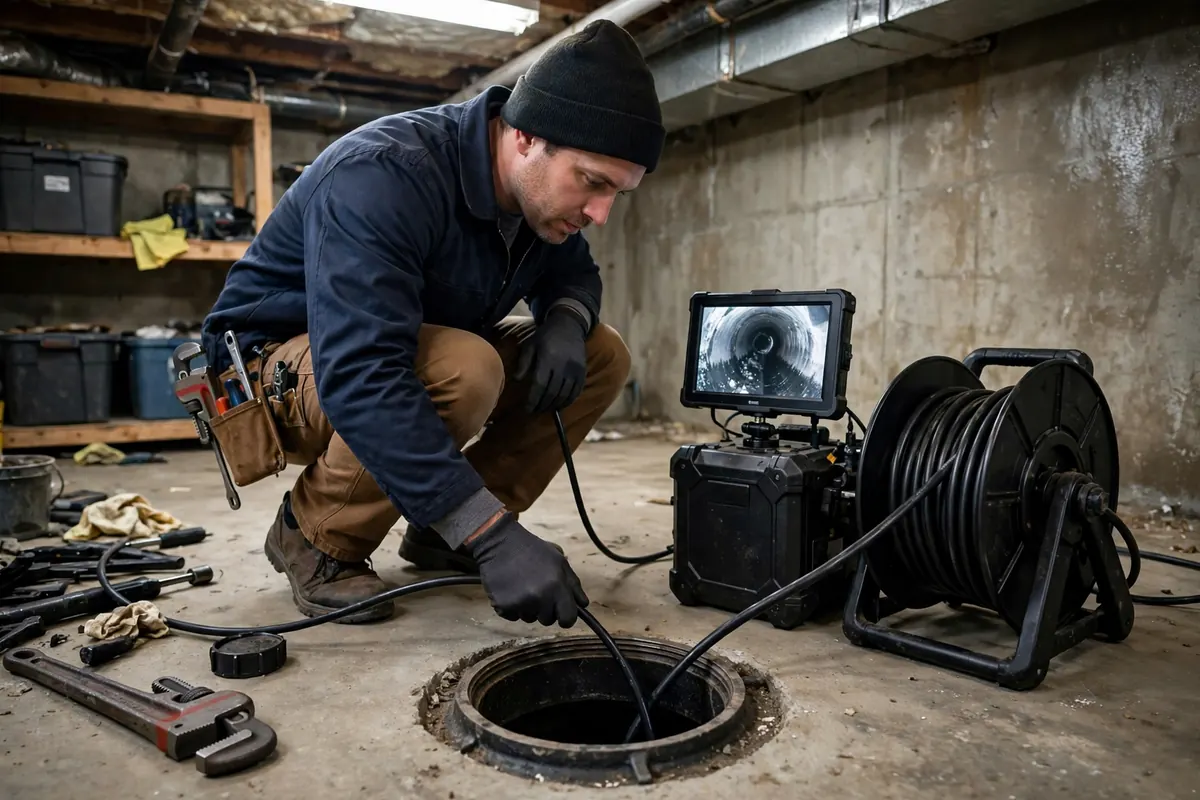
- Listen and image: Acoustic equipment listens for the hiss of escaping water through the wall or slab, and thermal imaging shows the warm or cool patch the leak creates. The two together narrow the location to a small area, often within inches.
- Mark and confirm: The location is marked on the surface, and the finding is confirmed — by the sound, the temperature, and the moisture reading — before any opening is made. The repair starts at the marked point, not at a guess.
- Repair and verify: The leaking section is exposed through the smallest opening that gives access, repaired with the right material for the system, and pressure-tested. The meter is checked again with everything off, to prove the leak is gone.
What the service includes
- Meter test to confirm a hidden leak
- Hot and cold line isolation and pressure testing
- Acoustic leak listening through walls and slabs
- Thermal imaging of floors and walls
- Moisture mapping of the affected area
- Slab leak location
- Service-line leak location in the yard
- Precise marking of the leak location before any opening
- Repair of the leaking section and verification by meter
Your options
Supply-line leak detection
A pressurised line leaking inside a wall, under a floor, or under a slab. Found by isolation, acoustic listening and thermal imaging, and repaired through a small opening at the marked point.
Slab leak detection
A line leaking under the concrete floor. Found by the warm patch on the floor, the acoustic signal, and the pressure test, and repaired through a small opening in the slab or by rerouting the line above the slab.
Service-line leak detection
A line leaking underground between the street main and the house. Found by the meter test, the wet patch in the yard, and acoustic listening, and repaired by replacing the leaking section of the service line.
Repair or replace?
A single pinhole in a sound copper line is a repair: cut out the leaking section, replace it, and the line serves for years. A galvanized line with a pinhole is a different answer, because the corrosion that made the pinhole is present along the whole line, and the next pinhole is already forming. A slab leak that has been repaired once can be repaired again, but a slab with a second leak in a different place is arguing for a reroute above the slab rather than another opening in the concrete. The detection visit answers the repair question with evidence: the condition of the pipe around the leak, and the history of the system it belongs to.
Can I do this myself?
A homeowner can do the meter test: shut off every tap and appliance, then watch the meter. If it moves, there is a leak, and that test is worth doing before the call because it confirms the problem in a minute. Beyond that, leak detection is instrument work. Listening for a leak through a wall, reading a thermal image, and isolating a line by pressure testing are professional skills, and opening a wall on a guess is how a small repair becomes a large one. The homeowner's most useful contribution is the history: when the bill jumped, which rooms show stains, and whether the floor has a warm spot.
Plumbing in Harrisburg: the local picture
Harrisburg's hidden leaks follow its housing. The median home was built in 1947, and the supply lines inside those walls are galvanized steel and copper installed generations ago. Midtown and Uptown rowhomes have lines running through shared walls and under slabs, where a leak is heard by one household and felt by another. Allison Hill's steep grades put lines under stress where the ground settles. In Shipoke, where the floodplain has taken river water in 1972, 2004 and 2011, lines under slabs have been soaked and shifted repeatedly. The suburbs carry the same risk in a different form: Mechanicsburg and Camp Hill ranches on slabs, Hershey's older homes with lines under concrete floors, Carlisle's borough houses with galvanized runs through stone foundations.
The water itself is part of the story. Central Pennsylvania water leaves mineral deposits, and the deposits narrow pipes and stress joints. A line that has been narrowing for years is a line that is closer to failing, and the failure shows up as a pinhole in a wall rather than a burst in a basement. That is why the meter test matters: a hidden leak announces itself on the bill before it announces itself on the ceiling.
Mistakes to avoid
- Waiting for the stain to appear: A hidden leak runs for weeks before the stain shows, and the water is spreading through framing and insulation the whole time. A jumping water bill is the early warning, and it deserves a call before the stain arrives.
- Opening walls at random: A stain on a ceiling is usually below or beside the leak, because water follows gravity and framing. Opening the wall at the stain often misses the leak by feet, and each wrong opening is a repair of its own.
- Ignoring a warm spot on the floor: A warm patch on a slab floor is a hot-water line leaking underneath. It is easy to dismiss as a heating quirk, and it is the clearest sign of a slab leak.
- Assuming a high bill is a meter error: A bill that jumps with no change in use is almost always a leak, not a meter error. The meter test — everything off, watch the meter — settles the question in a minute.
- Repairing the stain instead of the leak: Repainting a stained ceiling or replacing a damp section of drywall without finding the leak leaves the water running behind the new work. The leak is the repair; the stain is the evidence.
What to have ready before you call
- Do the meter test before the call: everything off, watch the meter for movement
- Note when the bill jumped and by roughly how much
- Note any warm spots on floors, stains, or sounds of running water
- Note which rooms show dampness and whether it is worse after hot-water use
- Clear access to the water meter, the main shutoff, and the affected rooms
What shapes the scope of the work
Leak detection varies with the type of leak and the access. A supply-line leak inside an accessible wall is a different job from a slab leak under a finished floor, and a service-line leak underground in the front yard is a different job again. The factors that shape the scope are where the leak is, how deep it sits, what instruments are needed to find it, and how much opening is needed to reach it. The detection itself is the step that controls the rest: a leak found within inches needs a small opening, and a leak found by guessing needs a large one. The repair is priced on the location the instruments found, not on the size of the stain.
How to choose a provider
Ask how the provider will find the leak before they open anything. A provider who talks about the meter test, line isolation, acoustic listening and thermal imaging is working with instruments rather than guesses. Ask whether the location will be marked and confirmed before the opening, and whether the meter will be checked again after the repair to prove the leak is gone. The provider who answers those questions is the one whose repair opens a small hole in the right place.
Other plumbing services
Questions, answered
How do I know if I have a hidden water leak?
Do the meter test: shut off every tap and appliance, then watch the water meter. If it is still moving, water is leaving the system somewhere it should not be. A bill that jumps with no change in use is the other classic sign.
What is a slab leak?
A slab leak is a supply line leaking under the concrete floor of a home built on a slab. The signs are a warm spot on the floor, a bill that jumps, low pressure, or the sound of running water when everything is off.
Can a leak be found without tearing the house apart?
Yes. Acoustic listening, thermal imaging, pressure testing and moisture mapping narrow a leak to a small area before any opening is made. The repair opens the smallest area that gives access to the marked point.
Why is my water bill suddenly high?
A hidden leak is the most common cause. A supply-line leak can lose hundreds of gallons a day without any visible water. The meter test settles the question in a minute.
What does a warm spot on my floor mean?
A warm patch on a floor, especially over a slab, usually means a hot-water line is leaking underneath. The heat from the leaking water warms the floor above it.
How are slab leaks repaired?
Through a small opening in the slab at the marked point, or by rerouting the line above the slab. A slab with a second leak in a different place usually argues for a reroute rather than another opening.
Do I need a permit for leak repair in Harrisburg?
Inside the City of Harrisburg, pipe installation or replacement needs a permit and the work must be done by a city-registered master plumber. The detection visit is diagnostic; the permit is handled as part of the repair.
How long can a hidden leak run before it is found?
Weeks or months. A pinhole in a copper line inside a wall can drip for a month before the stain appears on the ceiling below, and the water spreads through framing and insulation the whole time.
Need leak detection? Call Now.
Talk with a local plumbing professional about your home. Hours: Mon–Fri 7:00 AM–10:00 PM ET · Sat 8:00 AM–10:00 PM ET · Sun 7:00 AM–9:00 PM ET.
Call NowGet in touch
Call Now from any page and you will be connected with a local plumbing professional serving Harrisburg and the surrounding metro. You can also reach us by email at hello@harrisburgplumbingpros.com.
Hours: Mon–Fri 7:00 AM–10:00 PM ET · Sat 8:00 AM–10:00 PM ET · Sun 7:00 AM–9:00 PM ET.
Call Now