Home › Services › Drain Cleaning
Plumbing · Harrisburg, PADrain Cleaning in Harrisburg, PA
A drain that clears slowly is telling you something about the pipe behind it. Drain cleaning in Harrisburg, PA is the service that removes the buildup and blockage inside a drain or sewer line and restores the flow the house was built with. This page covers what clogs Harrisburg drains, how professional cleaning works, and when a slow drain is a sign of a larger problem in the line.
Talk with a local plumbing professional
Hours: Mon–Fri 7:00 AM–10:00 PM ET · Sat 8:00 AM–10:00 PM ET · Sun 7:00 AM–9:00 PM ET
Call NowWhat is drain cleaning?
Professional drain cleaning removes the material that is narrowing or blocking a drain, using mechanical equipment matched to the pipe. A hand auger clears a fixture trap. A drum machine with a cutting head clears a branch line. A hydro-jet uses high-pressure water to scour the inside of a sewer lateral back to its original diameter, which is the right tool for heavy grease and root mats. The tool is chosen by the pipe material and the blockage, not by what is on the truck.
Cleaning is different from clearing. Clearing opens a hole through a blockage so water passes again. Cleaning removes the buildup from the pipe wall so the drain stays open. A line that has only been cleared will clog again sooner, because the rough buildup that caught the clog is still there. The difference matters most in older cast-iron lines, where the interior surface itself is the problem.
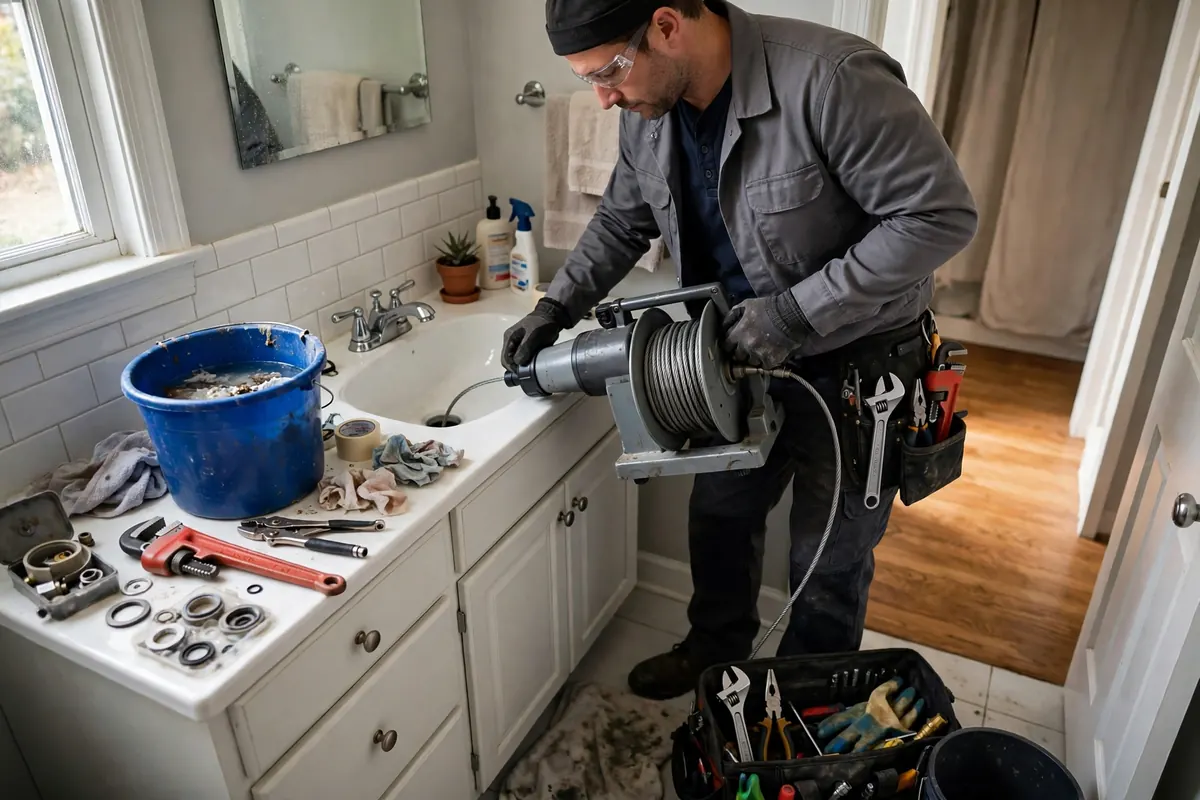
Harrisburg's drains carry two disadvantages at once. The housing stock is old — the median home was built in 1947 — so many drains are cast iron or clay tile with rough interior walls that catch grease, soap and debris. And the city's trees are old too: mature maples and oaks send roots into the joints of clay laterals, where they grow into a mat that catches everything passing through. A drain that was cleaned a year ago and is slow again is rarely a new clog; it is usually the same line telling you the cause was never removed.
Drain cleaning is a diagnostic service as much as a clearing service. A line that clogs once after a clear cause — a child's toy, a grease pour — is a simple job. A line that clogs every few months, or that backs up in more than one fixture, needs a camera look to find out whether the pipe itself is damaged, bellied, or full of roots.
Call NowSigns you need drain cleaning
- A drain that is getting slower: A sink or tub that drained fine six months ago and now takes minutes to empty is building up inside the pipe. Grease, soap scum and hair accumulate on rough cast-iron walls, and the narrowing is gradual until one day the drain barely moves.
- Water backing up in another fixture: Water appearing in a tub when the toilet flushes, or in a basement floor drain when the washing machine runs, means the blockage is downstream of both fixtures — in the main line, not in one trap.
- Gurgling sounds from drains: A drain that gurgles after a flush or while another fixture runs is pulling air through a partial blockage or a vent problem. Gurgling in several fixtures at once points to the main line.
- A smell that returns after cleaning: A drain smell that comes back days after a household cleaning usually means standing water or buildup further down the line, or a trap that is being siphoned dry by a partial blockage downstream.
- Recurring clogs in the same drain: A drain that clogs, gets cleared, and clogs again in the same place has a cause inside the pipe — a root intrusion, a bellied section that holds water, a broken joint, or a section of pipe that has lost its slope.
- Multiple slow fixtures at once: When the kitchen sink, the bathroom sink and the tub are all slow together, the problem is shared: the branch line or the main lateral. One slow fixture is a fixture problem; several slow fixtures are a system problem.
What causes it
- Grease and soap buildup: Grease poured down a kitchen sink coats the inside of the pipe and hardens as it cools. Soap scum does the same in bathroom drains. In older cast-iron pipe the rough interior grabs both, and the layer grows a little with every wash.
- Tree roots in clay laterals: Clay tile laterals have joints every few feet, and each joint is an opening for a root seeking water. A root mat inside a lateral catches paper and waste, and the blockage grows from the mat outward. Root intrusion is the most common cause of recurring main-line clogs in Harrisburg's older neighbourhoods.
- Hair and household debris: Hair is the main cause of slow bathroom drains, and it wraps around the stopper mechanism and the trap. In a kitchen, food particles and coffee grounds add to the grease layer. None of these need a chemical; they need mechanical removal.
- A bellied or broken pipe: A section of lateral that has settled and lost its slope holds water instead of draining it, and solids settle in the low spot. A cracked or offset joint does the same. These are pipe problems, not clog problems, and cleaning alone will not fix them.
- Flushed items that should not be flushed: Wipes labelled as flushable do not break down the way toilet paper does, and they are a leading cause of main-line blockages. Feminine products, cotton swabs, dental floss and paper towels belong in the bin, not the drain.
How the work is done
- Find which fixtures are affected: The visit starts by mapping the symptom: one fixture or several, one floor or the whole house. That map decides whether the work is at a trap, a branch line, or the main lateral.
- Clear the blockage mechanically: The right machine for the pipe is run from the right access point — a cleanout if the house has one, or the fixture itself. The cutting head or auger breaks up the blockage and pulls the material back out of the line.
- Test the flow: After clearing, the line is run at full flow from several fixtures at once. A drain that clears under a trickle and backs up under a full load still has a partial blockage, and the test is what proves the job is done.
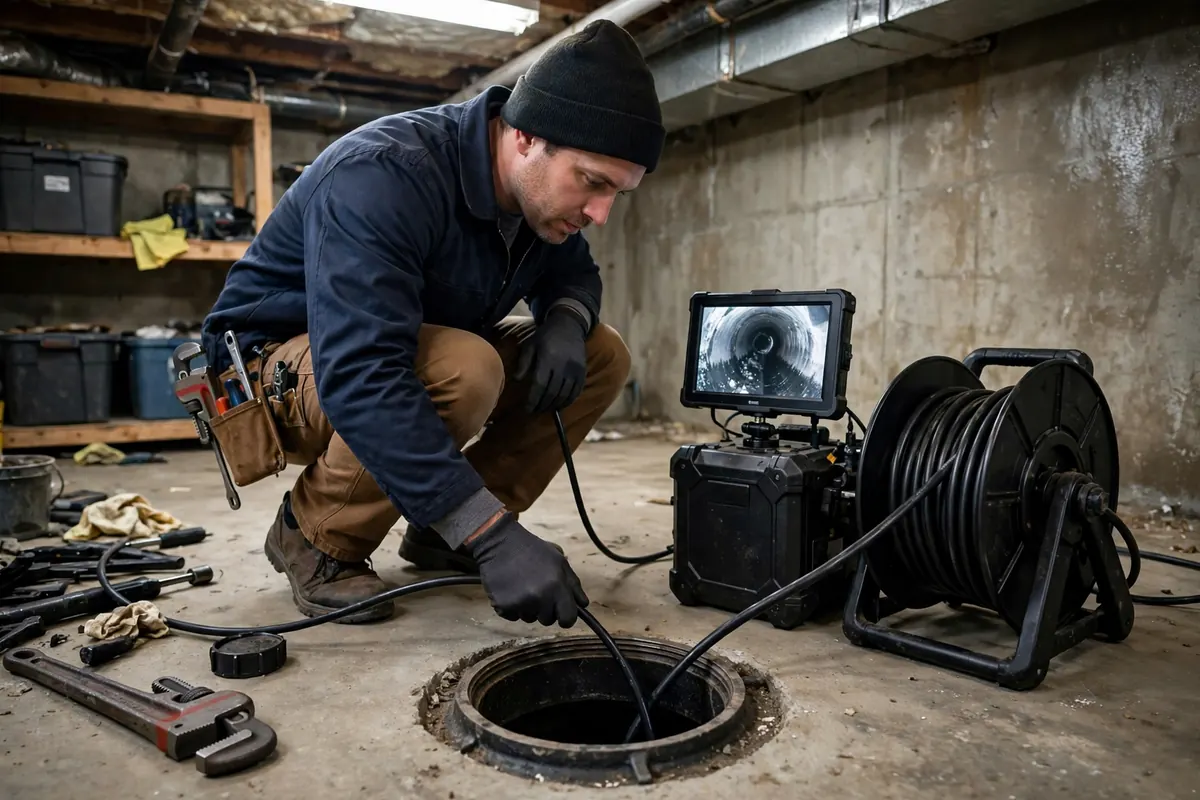
- Camera the line when it recurs: A drain that has clogged more than once gets a camera inspection. The camera shows roots, breaks, bellies and offsets in the actual pipe, and it turns a guess about the cause into a picture of it.
- Clean the pipe wall when the pipe is sound: Where the pipe is in good condition but heavily built up, a hydro-jet scours the interior back to a smooth surface. The jet is matched to the pipe material — older cast iron and clay need a gentler setting than new PVC.
What the service includes
- Fixture trap and branch-line clearing
- Main sewer lateral cleaning and root cutting
- Hydro-jet scouring for grease and heavy buildup
- Kitchen, bathroom, laundry and floor-drain service
- Cleanout location and access
- Sewer camera inspection when a clog recurs
- Flow testing from multiple fixtures after clearing
- Advice on what not to put down the drain
Your options
Mechanical auger clearing
The standard tool for a single clog or a branch-line blockage. A cable with a cutting head breaks up the material and pulls it out. It is the right choice when the pipe is sound and the blockage is local.
Hydro-jet cleaning
High-pressure water scours the full interior of the pipe. It is the right choice for grease-heavy kitchen lines, root mats, and laterals that have narrowed over years of buildup. It restores the pipe's diameter rather than just opening a hole.
Camera inspection plus cleaning
When a drain keeps clogging, the camera comes first or right after the clearing. The inspection shows whether the pipe is broken, bellied or full of roots, and it decides whether the next step is a repair or a maintenance schedule.
Repair or replace?
Drain cleaning and pipe repair answer different questions. Cleaning removes what is inside the pipe; repair fixes the pipe itself. A sound pipe with grease buildup is a cleaning job. A clay lateral with a collapsed section, a cast-iron line with a hole, or a belly that holds water is a repair job, and no amount of cleaning will change the shape of the pipe. The camera is what separates the two: a line that looks sound on camera and clogs again is a maintenance case; a line that shows a break on camera is a repair case, and the sewer line repair page explains the options for it.
Can I do this myself?
A plunger is the right tool for a single clogged toilet or a slow sink, and a drain snake from a hardware store can clear a shallow trap clog. What the homeowner cannot do is reach a main-line blockage, cut a root mat, or see inside the pipe. Chemical openers are the wrong tool in almost every case: they do not dissolve roots or a collapsed pipe, they can damage older cast iron, and they sit in standing water where the next person to open the line is exposed to them. A drain that has been treated with chemicals and is still blocked should be mentioned on the call, so the professional knows before opening the line.
Plumbing in Harrisburg: the local picture
Harrisburg's drain problems are written into its streets. Midtown and Uptown rowhomes have cast-iron stacks and clay laterals from the 1940s and earlier, running under front yards planted with mature street trees. Allison Hill's steep grades put laterals under extra stress where the ground settles. In the suburbs, Mechanicsburg and Camp Hill ranches have long laterals to the street, and Hershey's older homes near the factory carry the same clay-lateral era as the city. Across the metro, the pattern is the same: an old pipe, a mature tree, and a joint that has been open to roots for decades.
The Susquehanna adds a seasonal load. Spring thaw and heavy rain raise the water table, and a lateral with a partial root blockage that coped all winter backs up on the first heavy spring rain. Basement floor drains are the first place that water appears, because they are the lowest fixture in the house. A floor drain that backs up in wet weather and stays clear in dry weather is telling you the lateral is restricted, not that the fixture is broken.
Mistakes to avoid
- Reaching for chemicals first: Chemical openers do not clear roots, grease mats or broken pipe. They damage older pipe and make the professional's job hazardous. Mechanical clearing is the tool that works.
- Clearing the same drain every month: A drain that needs clearing every few weeks has a cause inside the pipe. Each clearing without a camera look is money spent on the symptom while the cause grows.
- Flushing wipes: Wipes do not break down like toilet paper, whatever the packaging says. They are one of the most common causes of main-line blockages in the metro.
- Ignoring the lowest fixture: A basement floor drain or a ground-floor tub is the early warning for a main-line blockage. Water or gurgling there means the blockage is downstream of the whole house.
- Pouring grease down the sink: Grease hardens inside the pipe as it cools, and it grabs everything that follows. It belongs in a container in the bin, not in the drain.
What to have ready before you call
- Note which fixtures are slow and whether more than one is affected
- Note when the problem started and whether it is worse in wet weather
- Clear access to the basement cleanout if you know where it is
- Stop using chemical drain openers before the visit
- Keep a record of how often the drain has been cleared before
What shapes the scope of the work
Drain work varies with access and with what the camera shows. A fixture trap cleared from inside the room is a different job from a main lateral that needs a cleanout dug out or a roof vent accessed, and a root mat that needs a jet is a different job from a single hair clog. The scope is set by where the blockage is, what it is made of, and whether the pipe itself is sound. A recurring clog that needs a camera inspection is a diagnostic step, not a repeat of the same clearing, and it is what keeps the next clog from arriving on the same schedule.
How to choose a provider
Ask how the professional will find the cause, not just how they will clear the clog. A provider who talks about camera inspection for a recurring clog, who asks which fixtures are affected, and who explains the difference between clearing and cleaning is working on the problem rather than the symptom. Ask whether the visit includes a flow test after the clearing, and what the plan is if the drain slows again within weeks. The answers to those questions separate a one-time clearing from a drain that stays open.
Other plumbing services
Questions, answered
Why does my Harrisburg drain keep clogging?
Recurring clogs usually mean the cause is inside the pipe: tree roots in a clay lateral, a bellied section that holds water, or heavy grease buildup on rough cast-iron walls. Clearing removes the blockage; a camera inspection finds the cause.
Are flushable wipes really flushable?
No. Wipes do not break down the way toilet paper does, and they are a leading cause of main-line blockages. They belong in the bin, even when the packaging says otherwise.
What is hydro-jetting and when is it used?
Hydro-jetting uses high-pressure water to scour the inside of a pipe back to a smooth surface. It is used for heavy grease, root mats, and laterals that have narrowed over years of buildup, where a cable would only open a hole through the blockage.
Why does water come up in my tub when the toilet flushes?
The blockage is downstream of both fixtures, in the main line. Water from the flush has nowhere to go, so it comes up through the lowest open fixture. That is a main-line problem, not a toilet problem.
Should I use chemical drain cleaner?
No. Chemical openers do not clear roots or broken pipe, they can damage older cast iron, and they sit in standing water. Mechanical clearing is the tool that works, and it does not leave chemicals in the line.
How do tree roots get into a sewer line?
Clay tile laterals have joints every few feet, and roots enter through those joints seeking water. Once inside, they grow into a mat that catches paper and waste. It is the most common cause of recurring main-line clogs in Harrisburg's older neighbourhoods.
What does a sewer camera inspection show?
The camera shows the inside of the pipe: roots, cracks, breaks, bellied sections, offsets and buildup. It turns a guess about the cause of a recurring clog into a picture of the actual pipe.
Why is my basement floor drain backing up in wet weather?
Spring thaw and heavy rain raise the water table, and a lateral with a partial blockage that coped in dry weather backs up when the ground is saturated. The floor drain is the lowest fixture, so it shows the backup first.
Need drain cleaning? Call Now.
Talk with a local plumbing professional about your home. Hours: Mon–Fri 7:00 AM–10:00 PM ET · Sat 8:00 AM–10:00 PM ET · Sun 7:00 AM–9:00 PM ET.
Call NowGet in touch
Call Now from any page and you will be connected with a local plumbing professional serving Harrisburg and the surrounding metro. You can also reach us by email at hello@harrisburgplumbingpros.com.
Hours: Mon–Fri 7:00 AM–10:00 PM ET · Sat 8:00 AM–10:00 PM ET · Sun 7:00 AM–9:00 PM ET.
Call Now