Home › Services › Frozen Pipe Thawing
Services · Harrisburg, PAFrozen Pipe Thawing in Harrisburg, PA
Harrisburg sees around 101 nights a year at or below freezing, and a pipe that freezes overnight is one of the most common winter plumbing calls in the city. A frozen pipe is a supply line in which the water has turned to ice, blocking flow to the tap it serves. The tap gives nothing, or only a tric
Talk with a local plumbing professional
Hours: Mon–Fri 7:00 AM–10:00 PM ET · Sat 8:00 AM–10:00 PM ET · Sun 7:00 AM–9:00 PM ET
Call NowWhat a frozen pipe means in a Harrisburg winter
Harrisburg sees around 101 nights a year at or below freezing, and a pipe that freezes overnight is one of the most common winter plumbing calls in the city. A frozen pipe is a supply line in which the water has turned to ice, blocking flow to the tap it serves. The tap gives nothing, or only a trickle, and the pipe is silent. The danger is not the freeze itself — it is what happens when the pipe thaws. Water expands by about nine percent when it freezes, and the pressure it creates is enough to split copper, PEX and galvanized steel alike. A pipe that froze overnight and split will start leaking the moment it thaws, which is why so many burst-pipe calls arrive on the morning after a cold night, as temperatures warm. On January 28, 2025, Harrisburg firefighters answered more than two dozen burst-pipe calls in a single day as temperatures warmed after a freeze — the pipes had split overnight and started leaking as they thawed.
A frozen pipe is usually found in the same places every winter: an exterior wall with inadequate insulation, an unheated crawl space, an attic run, a garage, or a kitchen sink or bathroom vanity on an outside wall, especially in an addition or a bump-out. Older Harrisburg homes are the most exposed, because their pipes were routed through these spaces before modern insulation standards, and the median home in the city was built in 1947. A pipe that froze once will freeze again in the same place unless something changes — insulation, air sealing, or a reroute — which is why thawing is only half the job. The other half is protection, and it is fitted at the same visit.
Signs a pipe is frozen
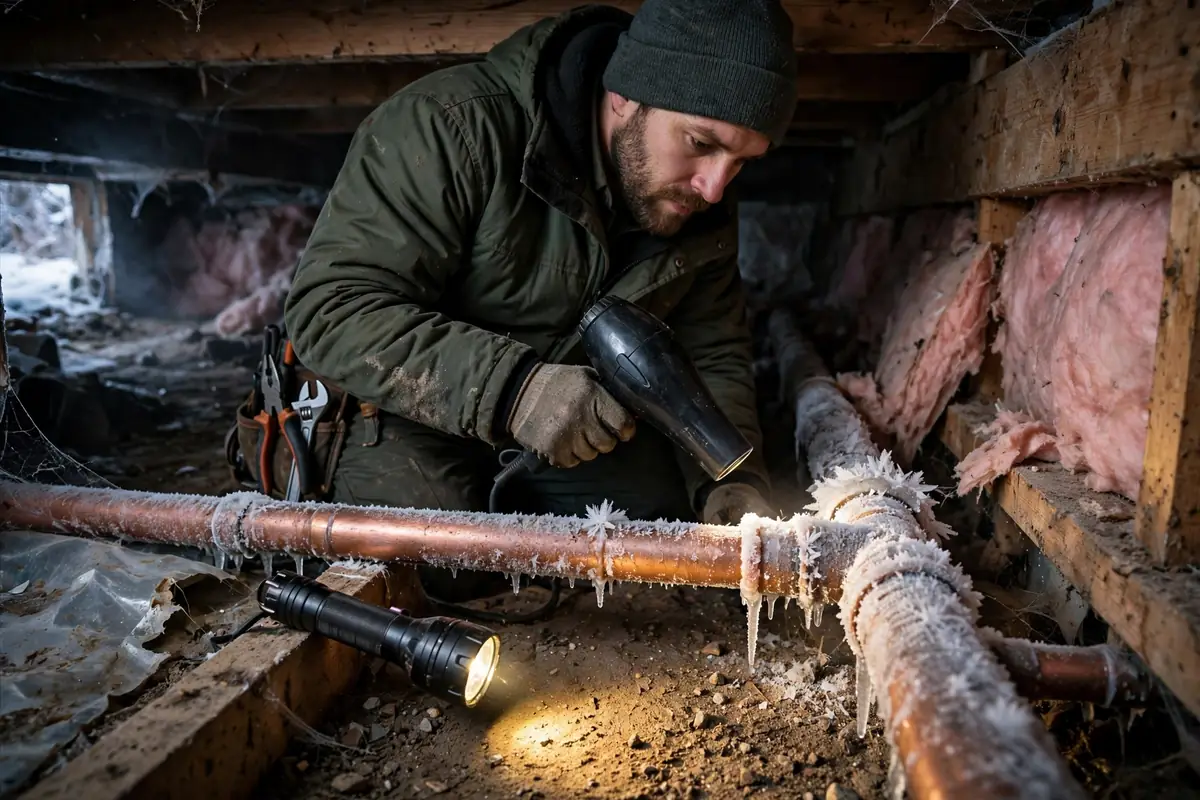
A tap that gives nothing during a cold snap, while other taps in the house still run, is the clearest sign. The frozen section is between the tap and the rest of the system, and the taps that still run show that the main supply is fine. A tap that gives only a trickle, or that sputters, is a pipe that is partly frozen or that has ice forming inside it. Frost on a bare pipe in a basement or crawl space is a visible sign, and so is a pipe that feels cold and rigid where the rest of the line feels normal. A toilet that will not refill, or a washing machine that will not fill, during a cold snap usually means the supply line to that fixture has frozen.
The sign that matters most is the one that arrives after the thaw: a leak. A pipe that was frozen and has now split starts leaking as the ice melts, and the water appears at the split — in a wall, above a ceiling, or on a basement floor. If a tap ran dry during a freeze and a leak appears as the temperature rises, the pipe froze and split, and the main should be shut off before anything else is done.
How safe thawing works
Safe thawing uses gentle, controlled heat on the frozen section, with the tap open so the melting water and the pressure have somewhere to go. A hair dryer on low, aimed at the frozen section and moved slowly along the pipe, is the standard method. A heat lamp or a heating pad wrapped around the pipe works the same way. The tap downstream is left open, so the water can flow as the ice melts and the pressure does not build behind the remaining ice. The work starts at the tap end and moves toward the frozen section, so the melting water has a path out.
What safe thawing never uses is an open flame. A torch, a propane heater, or any open flame near a frozen pipe is a fire risk, especially in a wall full of dry timber and insulation, and it heats the pipe unevenly enough to crack it. A frozen pipe should also never be thawed before it has been checked for a split. Look for a crack in the pipe wall, a bulge, or a damp patch around the frozen section, and shut the main off first if there is any doubt. A split pipe starts leaking the moment it thaws, and the main shutoff is the step that stops the water before it starts.
What happens after the thaw
Once the pipe is thawed and the tap is running, the pipe is checked along its length for a split, and the system is watched for a leak as the pressure returns. A pipe that thawed cleanly and shows no split is a pipe that needs protection, not a repair. The exposed run is insulated, the air leaks that let cold air reach the pipe are sealed, and the homeowner is shown where the freeze happened so the same spot can be watched on the next cold night. A pipe that has split is a burst pipe repair: the damaged section is cut out and replaced, and the run is insulated as part of the repair.
The visit also covers the rest of the house. A home that froze in one place has the same exposure in every similar run — the other exterior-wall pipes, the other crawl-space runs, the other attic lines. Checking them and insulating them at the same visit is what keeps the next cold night from producing a second emergency in a different room. The burst pipe repair page explains the repair itself, and the winterizing guide in the blog explains the full fall checklist that prevents the freeze in the first place.
Preventing the next freeze
Prevention starts in October or November, before the first hard freeze. Pipes in unheated spaces are insulated, hoses are disconnected from outdoor spigots, and the air leaks around the pipe runs are sealed. During a cold snap the heat is kept at a steady temperature, cabinet doors under sinks on exterior walls are opened so warm air reaches the pipes, and a tap is left dripping at a slow trickle on the coldest nights, so the water keeps moving. A home left empty or at a low thermostat setting is the most vulnerable of all, because a pipe that would have survived at a steady temperature freezes when the heat is turned down. The fall checklist in the blog walks through each of these steps in order, so the work is done before the first hard freeze rather than after it.
Talk with a local plumbing professional
Hours: Mon–Fri 7:00 AM–10:00 PM ET · Sat 8:00 AM–10:00 PM ET · Sun 7:00 AM–9:00 PM ET
Call NowQuestions, answered
How do I know if a pipe is frozen or burst?
A frozen pipe gives no water at the tap. A burst pipe gives water where it should not be — spraying, pooling, or staining a ceiling. A tap that ran dry during a freeze and a leak that appears as the temperature rises means the pipe froze and split.
Can I thaw a frozen pipe myself?
Yes, with gentle heat — a hair dryer on low, with the tap open — and only after checking for a split. Never use a torch or an open flame, and shut the main off first if you are unsure whether the pipe has split.
Which pipes in my house are most likely to freeze?
The ones in exterior walls, crawl spaces, attics, garages and unfinished basements — and the kitchen and bathroom runs on outside walls, especially in additions. Those are the runs to insulate before the first hard freeze.
Is it safe to thaw a pipe with the water still on?
No. If a pipe is suspected frozen, shut the main off before thawing. A pipe that has already split starts leaking the moment it thaws, and the shutoff stops the water before it starts.
Will the same pipe freeze again next winter?
It will if nothing changes. A pipe that froze once will freeze again in the same place unless the run is insulated, the air leaks are sealed, or the pipe is rerouted.
What should I do before the first hard freeze?
Insulate exposed pipes, disconnect hoses from outdoor spigots, seal air leaks around pipe runs, and know where the main shutoff is. The winterizing guide in the blog has the full fall checklist.
Need help with frozen pipe thawing? Call Now.
Talk with a local plumbing professional about your home. Hours: Mon–Fri 7:00 AM–10:00 PM ET · Sat 8:00 AM–10:00 PM ET · Sun 7:00 AM–9:00 PM ET.
Call NowGet in touch
Call Now from any page and you will be connected with a local plumbing professional serving Harrisburg and the surrounding metro. You can also reach us by email at hello@harrisburgplumbingpros.com.
Hours: Mon–Fri 7:00 AM–10:00 PM ET · Sat 8:00 AM–10:00 PM ET · Sun 7:00 AM–9:00 PM ET.
Call Now