Burst Pipes in Harrisburg, PA
Harrisburg pipes burst for two reasons, and both are written into the city's housing and its winters. The first is freezing. The city sees around 101 nights a year at or below freezing, and water expands by about nine percent when it freezes — enough pressure to split copper, PEX and galvanized stee
Talk with a local plumbing professional
Hours: Mon–Fri 7:00 AM–10:00 PM ET · Sat 8:00 AM–10:00 PM ET · Sun 7:00 AM–9:00 PM ET
Call NowWhy Harrisburg pipes burst
Harrisburg pipes burst for two reasons, and both are written into the city's housing and its winters. The first is freezing. The city sees around 101 nights a year at or below freezing, and water expands by about nine percent when it freezes — enough pressure to split copper, PEX and galvanized steel alike. The split happens while the water is frozen, and the leak shows when the pipe thaws. On January 28, 2025, Harrisburg firefighters answered more than two dozen burst-pipe calls in a single day as temperatures warmed after a freeze. The second reason is corrosion. The median Harrisburg home was built in 1947, and 43 percent of homes are older than 1940, with galvanized steel supply lines that have been corroding from the inside for generations. A line that has been narrowing for years can fail at a joint or a weak section without any freeze at all.
The pipes that burst are usually in the same places: an exterior wall with inadequate insulation, an unheated crawl space, an attic run, a garage, or a kitchen sink or bathroom vanity on an outside wall, especially in an addition or a bump-out. A pipe that froze once will freeze again in the same place unless something changes — insulation, air sealing, or a reroute — which is why the repair and the protection are fitted at the same visit. The burst pipe repair page explains the repair itself.
What to do in the first minutes
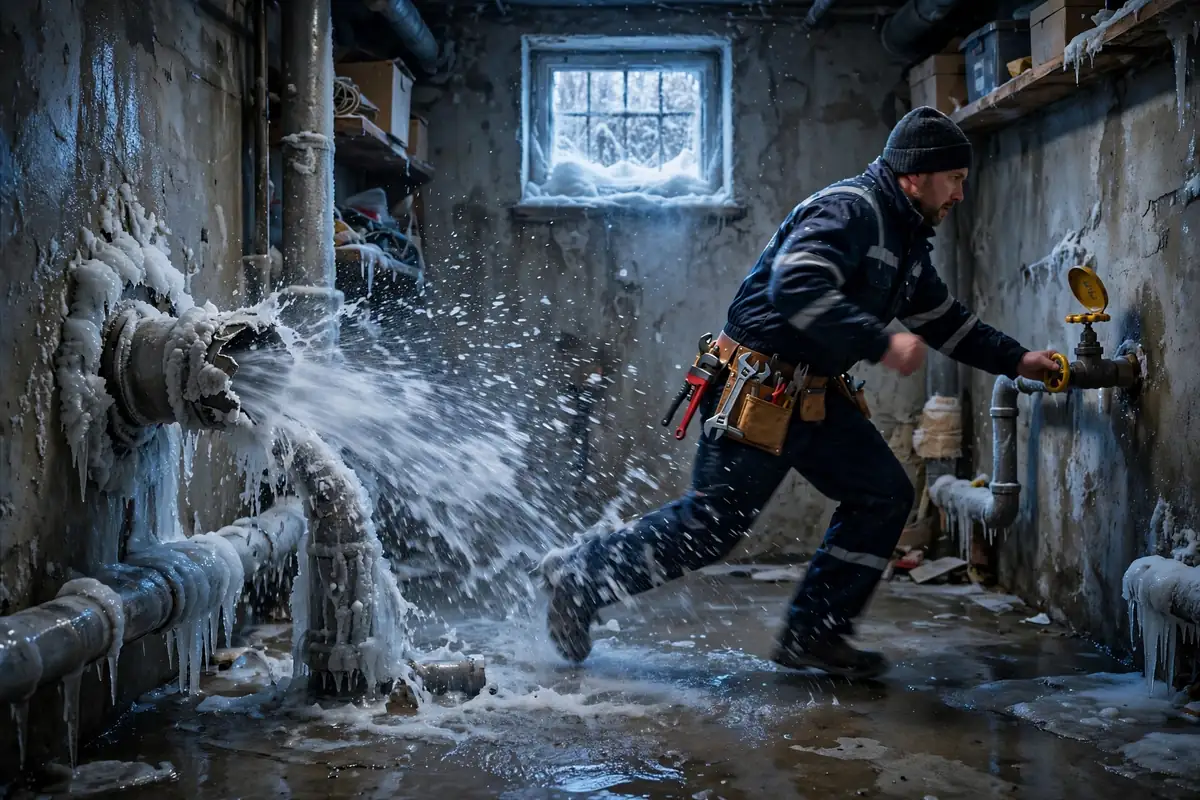
Shut off the main water valve first. In most Harrisburg rowhomes and older borough houses it is in the basement on the front wall, where the water service enters from the street, close to the meter. In a post-war ranch it is more often in a utility room or near the water heater. Shutting the main stops the damage from growing while help is on the way. If water is near outlets or the electrical panel, stay out of the room and call from a dry place — water and electricity together are a safety issue, not a plumbing inconvenience. Move valuables, rugs and electronics out of the water path if it is safe to do so, and take photos of the damage for your own records before cleanup starts.
Do not thaw a frozen pipe before checking for a split. A pipe that has already split starts leaking the moment it thaws, and the main shutoff is the step that stops the water before it starts. Do not use a torch or an open flame to thaw a pipe — gentle heat from a hair dryer on low, with the tap open, is the safe method, and only when the pipe has not split. The frozen pipe thawing page explains safe thawing in detail.
How a burst is repaired — and prevented
The repair replaces the damaged section of pipe rather than patching it. The split section is cut out, the pipe is inspected on either side of the split — a freeze stresses the pipe along its length — and the new section is matched to the existing system. The repaired run is insulated where it is exposed, the system is pressurised slowly, and every joint is checked. The rest of the exposed runs in the house are checked too, because a house that froze in one place has the same exposure elsewhere. Prevention is the second half of the visit: insulation, sealing the air leaks that let cold air reach the pipe, and knowing where the main shutoff is before winter rather than during it. The winterizing guide in the blog has the full fall checklist, so the work is done in October and November rather than in January.
The January pattern: freeze, thaw, and the morning after
The burst-pipe calls in Harrisburg follow a pattern that repeats every winter, and January is its peak. A cold snap parks over the region, the temperature drops into the low twenties and stays there, and the pipes in the exterior walls, crawl spaces and attics freeze overnight. The split happens while the water is frozen. The leak shows the next morning, when the temperature rises and the ice thaws — which is why the calls arrive in a wave on the morning after a cold night, rather than during the cold night itself. January 28, 2025 is the date that shows the pattern in one day: after a hard freeze, temperatures warmed, and Harrisburg firefighters answered more than two dozen burst-pipe calls as the frozen pipes thawed and started leaking.
The pattern has a second wave, a week later. The pipes that froze and did not split on the first night are weakened, and the next cold night finds the weak point. A house that had one burst in January and a second in February is a house whose pipes are telling a story about insulation and air sealing, not about bad luck. The repair and the protection are fitted at the same visit for exactly that reason: the insulation and the air sealing are what break the pattern, and the winterizing guide in the blog is the fall version of the same work.
Talk with a local plumbing professional
Hours: Mon–Fri 7:00 AM–10:00 PM ET · Sat 8:00 AM–10:00 PM ET · Sun 7:00 AM–9:00 PM ET
Call NowQuestions, answered
My pipe just burst — what is the first thing to do?
Shut off the main water valve. In most Harrisburg homes it is in the basement on the front wall, near the meter. Then call. Everything else — moving valuables, taking photos, finding the split — comes after the water has stopped.
Why does the leak appear the morning after a freeze?
The pipe splits while the water inside it is frozen and expanding. The leak only shows when the ice thaws and water can flow through the split again. That is why so many calls arrive as temperatures warm after a cold night.
Where should I look for frozen pipes in winter?
Start with the exterior-wall runs: kitchen sinks and bathroom vanities on outside walls, pipes in crawl spaces and attics, and lines in the garage. A tap that gives nothing during a cold snap, while other taps run, points to the frozen section.
How do I stop a pipe from bursting twice?
Change the conditions that froze it: insulate the run, seal the air leaks that let cold air reach it, or reroute it out of the cold space. A repaired pipe in the same uninsulated wall will freeze again at the next hard freeze.
Need help with burst pipes? Call Now.
Talk with a local plumbing professional about your home. Hours: Mon–Fri 7:00 AM–10:00 PM ET · Sat 8:00 AM–10:00 PM ET · Sun 7:00 AM–9:00 PM ET.
Call NowGet in touch
Call Now from any page and you will be connected with a local plumbing professional serving Harrisburg and the surrounding metro. You can also reach us by email at hello@harrisburgplumbingpros.com.
Hours: Mon–Fri 7:00 AM–10:00 PM ET · Sat 8:00 AM–10:00 PM ET · Sun 7:00 AM–9:00 PM ET.
Call Now