Home › Problems › Low Water Pressure
Problems · Harrisburg, PALow Water Pressure in Harrisburg, PA
Low water pressure in a Harrisburg home usually has one of four causes, and the pattern of the symptom tells you which one. A pressure drop at a single tap is a fixture problem — a clogged aerator, a failed cartridge, or a shutoff that is partly closed. A pressure drop at every tap is a system probl
Talk with a local plumbing professional
Hours: Mon–Fri 7:00 AM–10:00 PM ET · Sat 8:00 AM–10:00 PM ET · Sun 7:00 AM–9:00 PM ET
Call NowWhy the pressure drops
Low water pressure in a Harrisburg home usually has one of four causes, and the pattern of the symptom tells you which one. A pressure drop at a single tap is a fixture problem — a clogged aerator, a failed cartridge, or a shutoff that is partly closed. A pressure drop at every tap is a system problem, and the system problems in Harrisburg are the ones old housing produces: galvanized supply lines corroding from the inside until the flow drops, a hidden leak losing enough water to reduce the pressure at the taps, a pressure-reducing valve that has failed, or a main water line that is leaking between the street and the house. The pattern is the diagnosis, and the visit starts by mapping it: one tap or every tap, hot or cold or both, sudden or gradual.
Galvanized corrosion is the most common system-wide cause in the city. The median Harrisburg home was built in 1947, and the galvanized lines inside it have been narrowing from the inside for generations. The pressure does not drop overnight — it falls a little each year, until the shower is a trickle and the washing machine takes twice as long to fill. A hidden leak is the second cause: a supply line leaking inside a wall or under a slab loses water before it reaches the taps, and the pressure falls across the house. The leak detection page explains how a hidden leak is found. A failed pressure-reducing valve is the third: the valve that holds the municipal pressure down to a safe level for the house can fail and hold it down too far, or fail open and let the pressure run high enough to stress every joint in the system.
How the cause is found
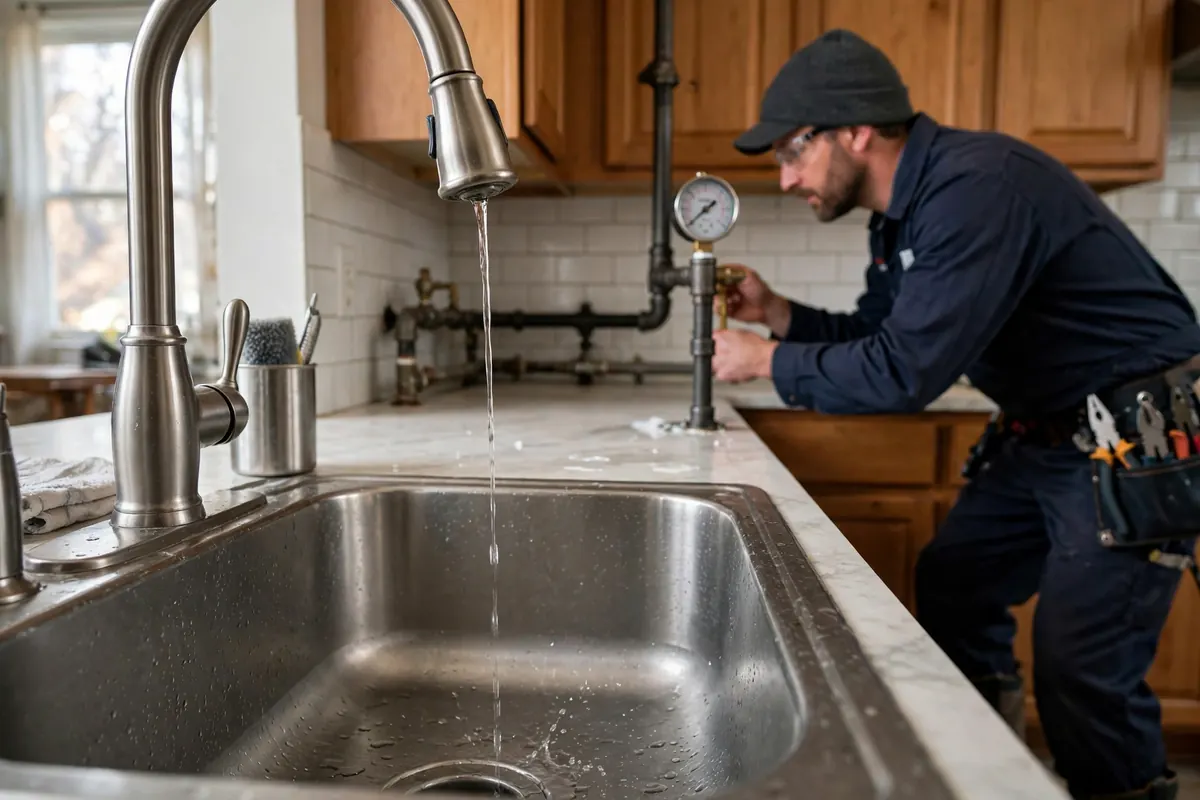
The diagnosis starts with the map: which taps are affected, whether the drop is in hot water, cold water, or both, and whether it arrived suddenly or gradually. A single tap is checked at the aerator and the shutoff. Every tap is checked at the main — the pressure at the entry, the condition of the pressure-reducing valve, and the meter test with everything off, which shows whether water is leaving the system through a hidden leak. A pressure reading at the entry that is normal while the taps are weak points to the lines inside the house: corrosion narrowing the galvanized runs. A pressure reading at the entry that is low points to the service line or the municipal supply, and the main water line repair page explains the service-line side. A meter that runs with everything off points to a leak, and the leak detection visit finds it.
Fixing the pressure — and when it means repiping
A clogged aerator or a failed fixture cartridge is a small repair. A failed pressure-reducing valve is a valve replacement. A hidden leak is a leak repair at the marked point. A service-line leak is a section replacement or a full replacement from the main to the house. Corroded galvanized lines are the one cause whose fix is not a part but a system: a home whose lines have narrowed along their whole length needs repiping, because replacing one section only moves the low pressure a few feet down the line. The repiping page explains the decision, and the test is the pattern: a single failure is a repair, a system-wide narrowing is a replacement. The fix is proven at the end of the visit by a pressure reading at the taps and a flow test at full load, so the improvement is measured rather than assumed.
The municipal supply versus the house
Low pressure has two possible sources, and the diagnosis starts by separating them: the municipal supply, and the house. The pressure at the entry — measured at the main, before the house's own lines — tells you which one it is. A pressure reading at the entry that is normal while the taps are weak points to the lines inside the house: corrosion narrowing the galvanized runs, or a hidden leak losing water before it reaches the taps. A pressure reading at the entry that is low points to the service line or the municipal supply, and the main water line repair page explains the service-line side. The distinction matters, because the fix for one is not the fix for the other — and a repipe will not fix a municipal supply problem, just as a call to the water authority will not fix corroded lines inside the house.
The pressure-reducing valve sits between the two. The valve holds the municipal pressure down to a safe level for the house, and it can fail in either direction: holding the pressure too low, so every tap is weak, or failing open and letting the pressure run high enough to stress every joint in the system. A valve that has failed is a valve replacement, and the pressure is measured before and after, so the fix is proven rather than assumed.
Talk with a local plumbing professional
Hours: Mon–Fri 7:00 AM–10:00 PM ET · Sat 8:00 AM–10:00 PM ET · Sun 7:00 AM–9:00 PM ET
Call NowQuestions, answered
Why is my water pressure low at every tap?
A system-wide cause: corroded galvanized lines narrowing from the inside, a hidden leak, a failed pressure-reducing valve, or a leaking service line. One tap low is a fixture problem; every tap low is a system problem.
Can corroded pipes cause low water pressure?
Yes. Galvanized steel corrodes from the inside, narrowing the pipe until the flow drops at every tap. It is the most common system-wide cause in Harrisburg's older homes.
How do I know if low pressure is a leak?
Do the meter test: shut off every tap and appliance, then watch the meter. If it moves, water is leaving the system through a hidden leak.
Will repiping fix low water pressure?
If the cause is corroded galvanized lines narrowing along their length, yes. New lines restore the flow the house was built with. If the cause is the municipal supply, a repipe will not change it.
Need help with low water pressure? Call Now.
Talk with a local plumbing professional about your home. Hours: Mon–Fri 7:00 AM–10:00 PM ET · Sat 8:00 AM–10:00 PM ET · Sun 7:00 AM–9:00 PM ET.
Call NowGet in touch
Call Now from any page and you will be connected with a local plumbing professional serving Harrisburg and the surrounding metro. You can also reach us by email at hello@harrisburgplumbingpros.com.
Hours: Mon–Fri 7:00 AM–10:00 PM ET · Sat 8:00 AM–10:00 PM ET · Sun 7:00 AM–9:00 PM ET.
Call Now