Home › Services › Water Heater Replacement
Services · Harrisburg, PAWater Heater Replacement in Harrisburg, PA
A water heater is replaced when the tank itself has failed, or when the heater has reached the point where the next repair is the tank wall. A tank leaking through its wall cannot be repaired — the steel has corroded through, and the leak only grows. Rust-coloured water in the hot taps, a rumbling t
Talk with a local plumbing professional
Hours: Mon–Fri 7:00 AM–10:00 PM ET · Sat 8:00 AM–10:00 PM ET · Sun 7:00 AM–9:00 PM ET
Call NowWhen replacement is the right answer
A water heater is replaced when the tank itself has failed, or when the heater has reached the point where the next repair is the tank wall. A tank leaking through its wall cannot be repaired — the steel has corroded through, and the leak only grows. Rust-coloured water in the hot taps, a rumbling tank full of sediment, and a heater over twelve years old with a depleted anode rod are the signs that the tank is at the end of its service life. A heater that has had an element, a thermostat and a relief valve replaced in short order is telling the same story: the parts are being replaced around a tank that is failing.
Replacement is also the moment to fix the sizing. A household that has grown since the heater was installed — children, a new bathroom, a soaking tub — may have outgrown a forty-gallon tank, and the new heater is sized to the household as it stands today rather than to the household that lived there when the old one was installed. The tankless water heater installation page explains the tankless option, which suits a household that runs out of hot water and a home with the gas capacity to support it. A new tank heater suits a household whose demand is modest and a home where the simplest replacement is the honest answer.
Sizing the new heater
Sizing starts with the household's actual hot-water use: how many people, how many bathrooms, whether showers overlap, whether the washer and dishwasher run at the same time, and whether a soaking tub is in use. A tank is sized by gallons stored, and the size must cover the peak demand — the busiest hour of the day — rather than the average. A tank that is too small runs out of hot water every morning. A tank that is too large keeps a large volume of water hot around the clock, which wastes energy. The sizing exercise counts the fixtures and the people, and it is done before the heater is chosen rather than after it is installed.
The fuel type is the second decision. A gas heater recovers faster than an electric heater, which matters for a household with back-to-back showers. An electric heater is simpler to install where there is no gas service, and it needs no venting. The existing connections — gas line, venting, electrical circuit — shape the choice, and the installer checks them before recommending a fuel type. The venting matters most in an older Harrisburg home, where the existing vent may be shared with a furnace or may not meet current standards for a new heater.
How the replacement is done
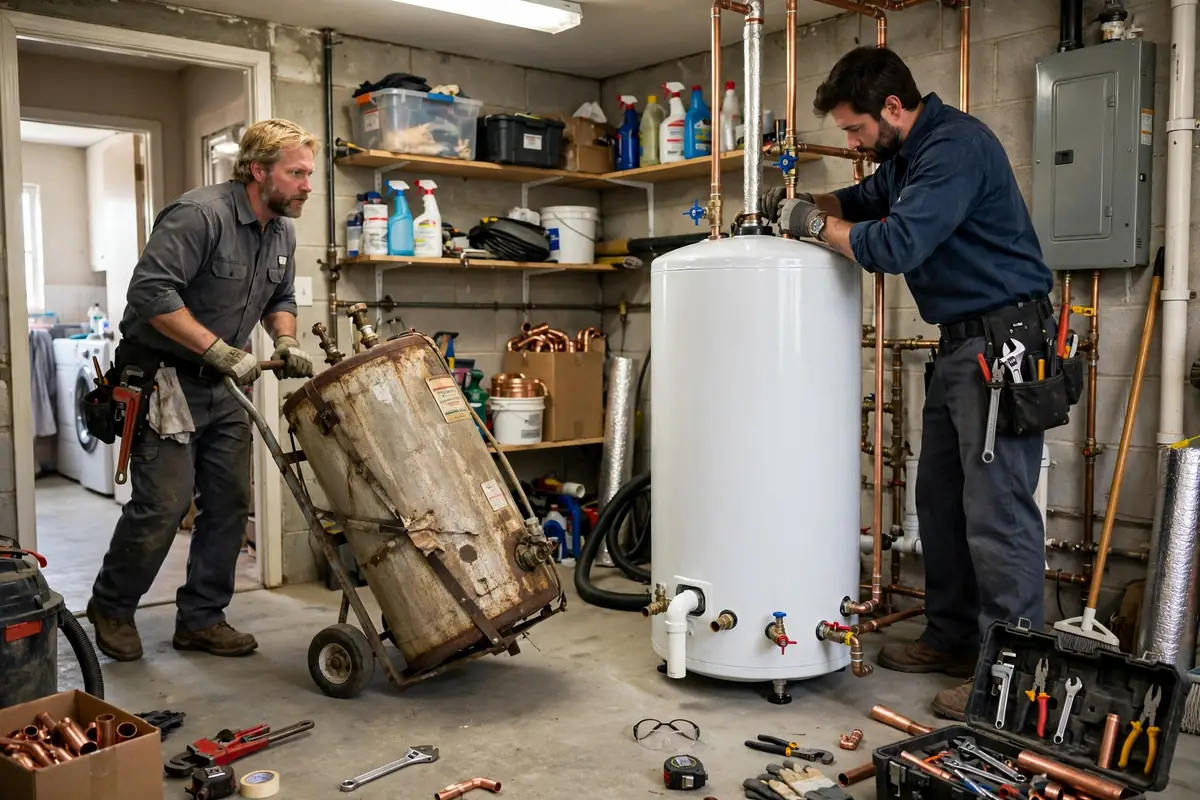
The old heater is drained, disconnected, and removed, and the new heater is set in its place. The water lines are connected, the gas line or electrical circuit is connected, the venting is checked and corrected where it needs to be, and the temperature-and-pressure relief valve is fitted with a proper discharge line. The tank is filled, the air is bled from the lines, and the heater is started. The temperature is set, the system is checked for leaks at every connection, and the heater is tested at full draw — a shower's worth of hot water, not a tap trickle — so the sizing is proven in use.
The work includes the details that are easy to skip: a new shutoff valve on the cold-water line, an expansion tank where the system is closed, a drain pan where the heater sits over finished space, and the disposal of the old tank. Inside the City of Harrisburg, the work needs a permit, and the permit is handled as part of the job. The water heater repair page explains the repairs that come before replacement, and the tankless page explains the tankless alternative.
Getting the most from the new heater
A new heater's service life is set in its first year. An annual flush removes the sediment that central Pennsylvania water leaves behind, and the anode rod is checked on schedule so the tank wall stays protected. The temperature is set to a safe level, the relief valve is tested, and the area around the heater is kept clear so the burner or the elements can be serviced. A heater that is flushed annually and whose anode rod is replaced when it is consumed will serve for its full expected life; a heater that is never flushed will lose capacity, run louder, and fail earlier. The maintenance is simple, and it is the difference between a heater that lasts and a heater that is replaced early.
Talk with a local plumbing professional
Hours: Mon–Fri 7:00 AM–10:00 PM ET · Sat 8:00 AM–10:00 PM ET · Sun 7:00 AM–9:00 PM ET
Call NowQuestions, answered
When should a water heater be replaced instead of repaired?
When the tank is leaking through its wall, when the heater is over twelve years old with rust-coloured water and a rumbling tank, or when several parts have failed in short order. A failed part in a sound tank is a repair; a failing tank is a replacement.
What size water heater does my household need?
It depends on the people, the bathrooms, and whether showers, laundry and dishes overlap. The sizing counts the fixtures and the peak demand — the busiest hour — rather than the average use.
Should I switch to tankless when my tank heater fails?
It depends on the household's demand and the home's gas capacity and vent route. Tankless suits a household that runs out of hot water; a new tank suits modest demand and the simplest replacement. The tankless page explains the comparison.
How long does a water heater replacement take?
Usually a day, including draining and removing the old heater, installing the new one, connecting water, gas or electric, and venting, and testing at full draw.
Do I need a permit for a water heater replacement in Harrisburg?
Inside the City of Harrisburg, pipe and heater installation needs a permit and the work must be done by a city-registered master plumber. The permit is handled as part of the job.
What happens to my old water heater?
It is drained, disconnected, removed, and disposed of as part of the replacement. The new heater is set in its place and connected to the existing water, gas or electric lines.
Need help with water heater replacement? Call Now.
Talk with a local plumbing professional about your home. Hours: Mon–Fri 7:00 AM–10:00 PM ET · Sat 8:00 AM–10:00 PM ET · Sun 7:00 AM–9:00 PM ET.
Call NowGet in touch
Call Now from any page and you will be connected with a local plumbing professional serving Harrisburg and the surrounding metro. You can also reach us by email at hello@harrisburgplumbingpros.com.
Hours: Mon–Fri 7:00 AM–10:00 PM ET · Sat 8:00 AM–10:00 PM ET · Sun 7:00 AM–9:00 PM ET.
Call Now