Home › Blog › How to Winterize Your Pipes in Harrisburg, PA
Guide · Harrisburg, PAHow to Winterize Your Pipes in Harrisburg, PA
Harrisburg sees around 101 nights a year at or below freezing, and the pipes in the city's older homes are exposed to every one of them. Winterizing is the fall work that keeps a pipe from freezing, splitting, and leaking — and it is work that belongs in October and November, before the first hard f
Talk with a local plumbing professional
Hours: Mon–Fri 7:00 AM–10:00 PM ET · Sat 8:00 AM–10:00 PM ET · Sun 7:00 AM–9:00 PM ET
Call NowPublished 2026-11-17 · Harrisburg Plumbing Pros · Harrisburg, PA
Harrisburg sees around 101 nights a year at or below freezing, and the pipes in the city's older homes are exposed to every one of them. Winterizing is the fall work that keeps a pipe from freezing, splitting, and leaking — and it is work that belongs in October and November, before the first hard freeze, rather than in January, after the damage is done. This guide is the full fall checklist for a Harrisburg home: the pipes to insulate, the shutoffs to find, the hose bibs to drain, and the habits that carry the house through the winter.
The short version
Harrisburg's winters do not arrive as a single cold snap. They arrive as a series of freeze-thaw cycles: pipes sit at the edge of freezing for days, then a polar-vortex night pushes them over. Water expands by about nine percent when it freezes, and the pressure it creates is enough to split copper, PEX and galvanized steel alike. The split happens while the water is frozen, and the leak shows whe
Why Harrisburg pipes freeze
Harrisburg's winters do not arrive as a single cold snap. They arrive as a series of freeze-thaw cycles: pipes sit at the edge of freezing for days, then a polar-vortex night pushes them over. Water expands by about nine percent when it freezes, and the pressure it creates is enough to split copper, PEX and galvanized steel alike. The split happens while the water is frozen, and the leak shows when the pipe thaws — which is why so many burst-pipe calls arrive on the morning after a cold night, as temperatures warm. On January 28, 2025, Harrisburg firefighters answered more than two dozen burst-pipe calls in a single day as temperatures warmed after a freeze. The pipes had split overnight and started leaking as they thawed.
The housing stock is the second half of the problem. The median Harrisburg home was built in 1947, and 43 percent of homes are older than 1940. Their pipes run through exterior walls, crawl spaces, attics and garages that were built before modern insulation standards, and the pipes in those spaces track outdoor temperatures. A kitchen sink or a bathroom vanity on an outside wall, especially in an addition or a bump-out, is the classic freeze point. A pipe that froze once will freeze again in the same place unless something changes — and winterizing is the something that changes.
Step 1: Find the pipes at risk
The first step is a walk through the house with a single question: where does a pipe run through a cold space? The list is usually short and always the same: pipes in exterior walls, pipes in crawl spaces, pipes in attics, pipes in garages, pipes in unfinished basements, and the supply lines to outdoor hose bibs. Open the cabinet doors under sinks on exterior walls and look at the pipes behind them. Go into the basement and the crawl space and look at the runs along the outside walls. Check the garage for a water line to a utility sink or a hose bib. Each of these is a freeze point, and each one goes on the list. The pipes that froze last winter go at the top of the list, because a pipe that froze once will freeze again in the same place.
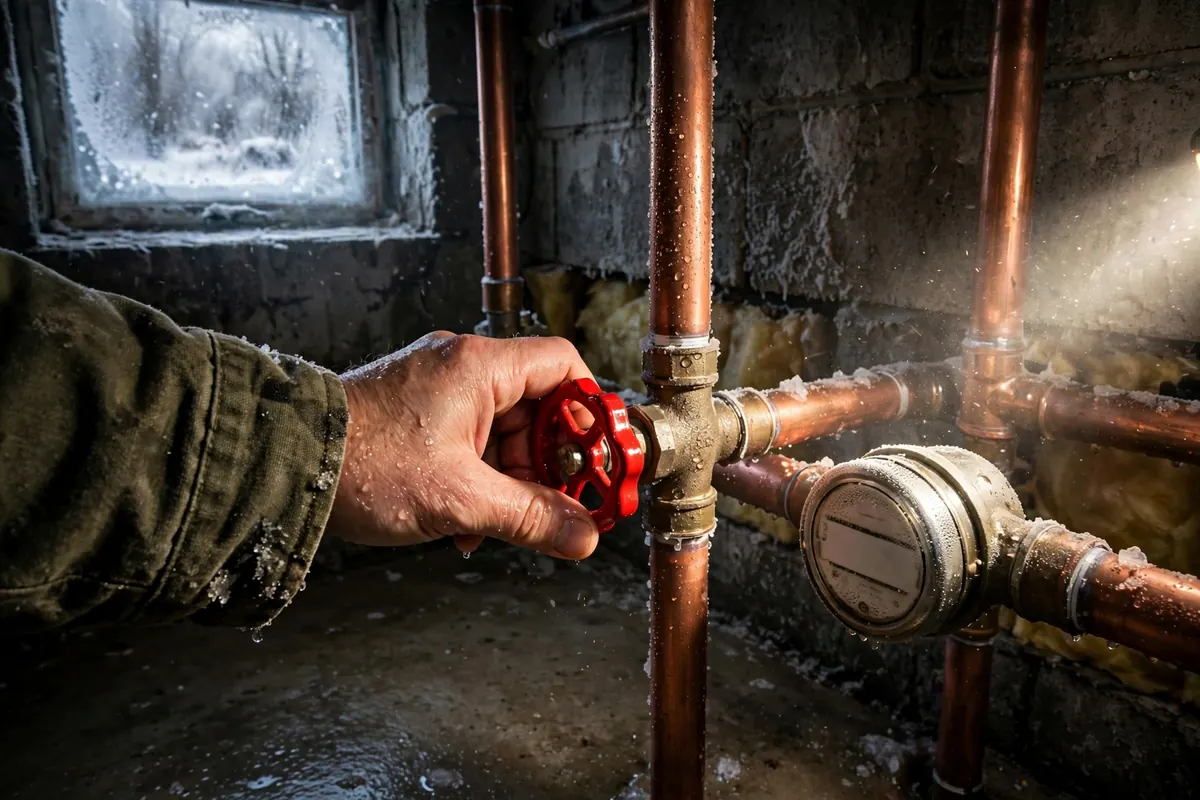
The second part of the walk is finding the main shutoff. In most Harrisburg rowhomes and older borough houses it is in the basement on the front wall, where the water service enters from the street, close to the meter. In a post-war ranch it is more often in a utility room or near the water heater. Find it now, in October, when the basement is dry and the lights are on — not in January, in the dark, with water running. Make sure the valve turns, and make sure everyone in the household knows where it is.
Step 2: Insulate the exposed runs
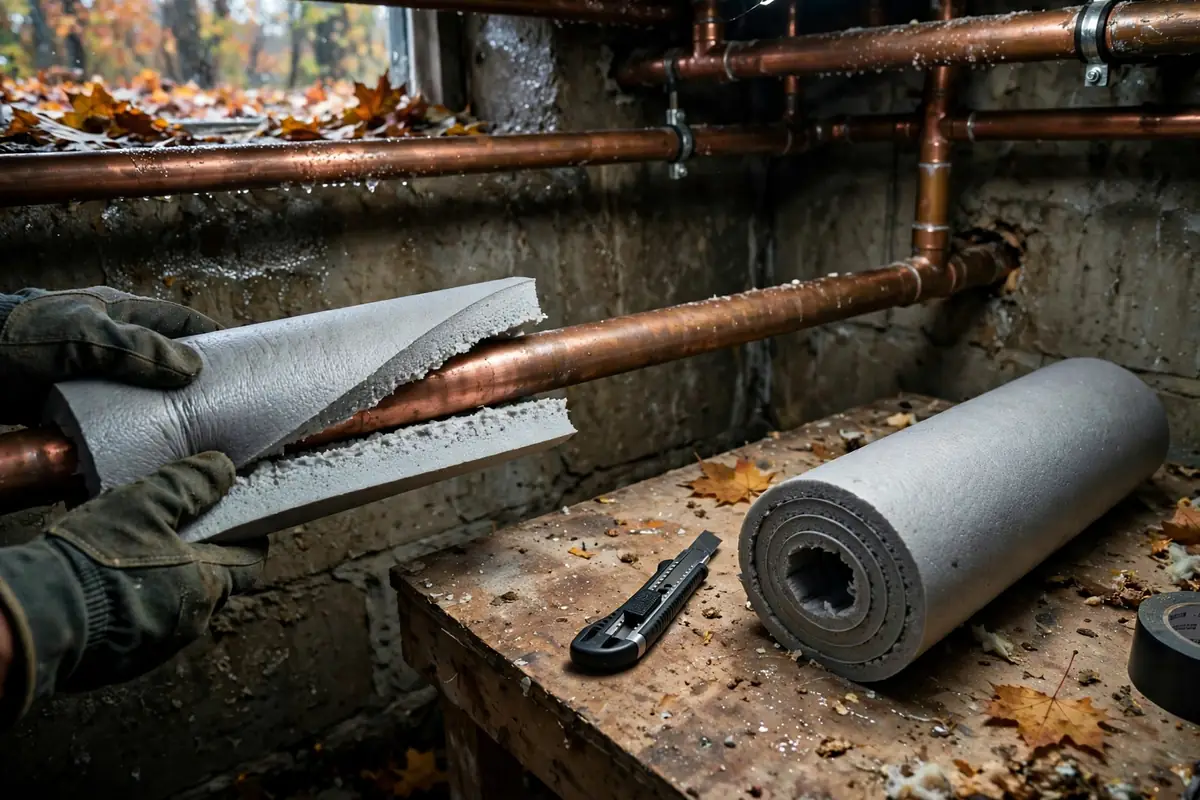
Insulation is the core of winterizing, and it is fitted to the pipes on the list from step one. Foam pipe insulation — the split tubes that snap around the pipe — covers the runs in crawl spaces, attics, garages and unfinished basements. The insulation must cover the whole run, including the bends and the fittings, because a gap in the insulation is a freeze point. Heat tape, the electric cable that wraps around a pipe and warms it, is the answer for a run that cannot be insulated enough on its own — a pipe in a particularly cold crawl space, or a line that has frozen before. Heat tape is fitted to the manufacturer's instructions, with a thermostat, and it is never overlapped on itself.
The air leaks matter as much as the insulation. Cold air reaching a pipe through a gap in the wall, a crack around a pipe penetration, or an open vent in a crawl space will freeze a pipe that insulation alone would have protected. Seal the gaps around pipe penetrations with caulk or foam, close the crawl-space vents for the winter, and seal the air leaks in the rim joist where the pipe runs pass through. Insulation slows the cold; air sealing stops it at the source.
Step 3: Drain the outdoor water
Outdoor hose bibs are one of the most common freeze points in a Harrisburg home, and they are also one of the easiest to protect. Disconnect every hose from every outdoor spigot before the first hard freeze. A hose left attached traps water in the line, and when that water freezes it expands back into the pipe, cracking the fixture or the connected pipe inside the wall. Once the hoses are off, shut off the water to the outdoor spigots from the inside valve, if the house has one, and open the outdoor spigot to drain the remaining water. A frost-proof hose bib — the kind with a long stem that shuts off inside the heated wall — is the permanent answer for a spigot that freezes every year, and it is fitted as part of the fall work.
The same logic applies to any water line that runs to an unheated space and will not be used over the winter: a line to a garage utility sink, a line to an outdoor kitchen, a line to a seasonal property. Shut it off, drain it, and leave the tap open so any remaining water has somewhere to expand. A vacant or under-heated home needs the same treatment for the whole system: the heat kept at a steady temperature, or the water shut off and the lines drained, because a home left at a low thermostat setting freezes quickly.
Step 4: Protect the habits for the coldest nights
Insulation and draining are the fall work. The winter habits are the nightly work, and they matter on the coldest nights of the year. Keep the heat at a steady temperature during a cold snap — turning it down at night saves little and puts the pipes at risk, because the pipes in the exterior walls cool faster than the rooms. Open the cabinet doors under sinks on exterior walls, so warm air from the room reaches the pipes behind them. On the coldest nights, leave a tap dripping at a slow trickle — the moving water is harder to freeze, and the open tap gives the pressure somewhere to go if ice does start to form. The tap to leave dripping is the one furthest from the main, on the coldest run in the house.
Know the signs of a frozen pipe, so the response is fast when it happens. A tap that gives nothing during a cold snap, while other taps still run, is a frozen line. A tap that gives only a trickle is a line that is partly frozen. Frost on a bare pipe in a basement or crawl space is a visible sign. And the sign that matters most is the one that arrives after the thaw: a leak. A pipe that was frozen and has now split starts leaking as the ice melts, and the main should be shut off before anything else is done. The frozen pipe thawing page explains safe thawing, and the burst pipe repair page explains the repair.
Step 5: The sump pump, the water heater, and the rest of the system
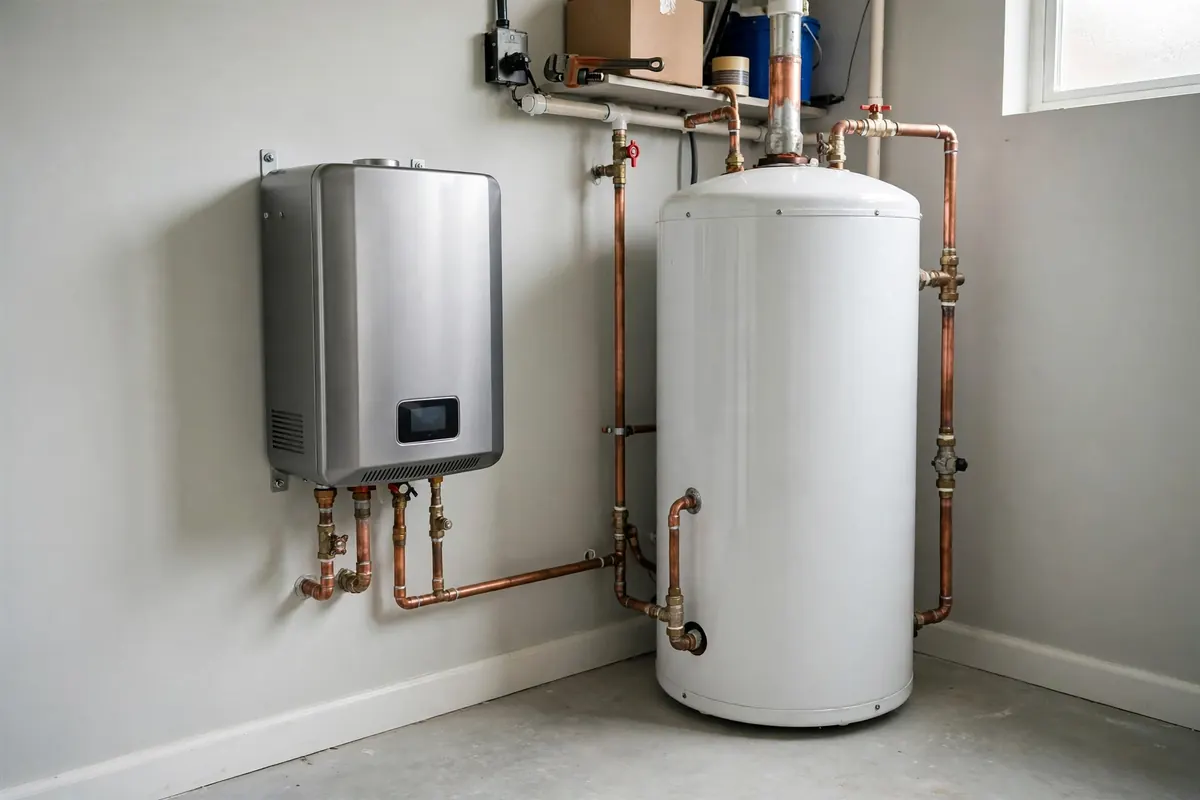
Winterizing is not only about the supply lines. The sump pump's discharge line freezes where it leaves the house, and a frozen discharge stops the system even when the pump is working — so the line is checked, sloped to drain, and protected before winter. The water heater's own lines, where the heater sits in an unheated utility room or garage, are insulated like any other exposed run. The outdoor drains and the gutters are cleared, so melting snow has somewhere to go in the spring thaw rather than pooling against the foundation. And the whole system is tested before the first hard freeze: the main shutoff turns, the heat is steady, the insulation is in place, and everyone in the household knows where the shutoff is and what to do if a pipe freezes.
The fall checklist is short, and it is worth doing in order: find the pipes at risk, insulate them, drain the outdoor water, set the winter habits, and check the sump and the heater. Done in October and November, it is an afternoon's work. Done in January, after a burst, it is a repair, a cleanup, and a bill. Harrisburg's winters will come either way — the checklist decides whether the house is ready for them.
Key takeaways
Winterizing is fall work, not winter work: find the pipes at risk, insulate them, drain the outdoor water, set the winter habits, and check the sump and the heater — in October and November, before the first hard freeze. The main shutoff is the single most important thing to know before winter: in most Harrisburg homes it is in the basement on the front wall, near the meter. And the pattern to remember is the freeze-thaw one: the pipe splits while it is frozen, and the leak shows when it thaws, which is why the calls arrive on the morning after a cold night.
Talk with a local plumbing professional
Hours: Mon–Fri 7:00 AM–10:00 PM ET · Sat 8:00 AM–10:00 PM ET · Sun 7:00 AM–9:00 PM ET
Call Now
Questions, answered
When should I winterize my pipes in Harrisburg?
In October or November, before the first hard freeze. Harrisburg sees around 101 nights a year at or below freezing, and the work is done in the fall, not after the damage.
Where is the main water shutoff in a Harrisburg home?
In most rowhomes and older borough houses it is in the basement on the front wall, where the water service enters from the street, close to the meter. In a post-war ranch it is more often in a utility room or near the water heater.
Should I leave a tap dripping on cold nights?
Yes, on the coldest nights — a slow trickle from the tap furthest from the main, on the coldest run in the house. Moving water is harder to freeze, and the open tap gives pressure somewhere to go.
Do I need to disconnect hoses before winter?
Yes. A hose left attached traps water in the line, and when it freezes it expands back into the pipe, cracking the fixture or the connected pipe inside the wall.
What is the most common freeze point in a Harrisburg home?
Exterior walls, crawl spaces, attics, garages and unfinished basements — and kitchen sinks and bathroom vanities on outside walls, especially in additions.
Will insulation alone stop a pipe from freezing?
Insulation slows the cold; air sealing stops it at the source. Seal the gaps around pipe penetrations and close crawl-space vents for the winter, as well as insulating the runs.
Questions about your plumbing? Call Now.
Talk with a local plumbing professional about your home. Hours: Mon–Fri 7:00 AM–10:00 PM ET · Sat 8:00 AM–10:00 PM ET · Sun 7:00 AM–9:00 PM ET.
Call NowGet in touch
Call Now from any page and you will be connected with a local plumbing professional serving Harrisburg and the surrounding metro. You can also reach us by email at hello@harrisburgplumbingpros.com.
Hours: Mon–Fri 7:00 AM–10:00 PM ET · Sat 8:00 AM–10:00 PM ET · Sun 7:00 AM–9:00 PM ET.
Call Now