Home › Blog › What to Do When a Pipe Bursts
Guide · Harrisburg, PAWhat to Do When a Pipe Bursts
A burst pipe is the most destructive plumbing failure a Harrisburg home can suffer, and the first ten minutes decide how much of the home gets wet. A single split pipe can release hundreds of gallons per hour into walls, ceilings and finished basements, and the damage grows with every minute the mai
Talk with a local plumbing professional
Hours: Mon–Fri 7:00 AM–10:00 PM ET · Sat 8:00 AM–10:00 PM ET · Sun 7:00 AM–9:00 PM ET
Call NowPublished 2026-11-17 · Harrisburg Plumbing Pros · Harrisburg, PA
A burst pipe is the most destructive plumbing failure a Harrisburg home can suffer, and the first ten minutes decide how much of the home gets wet. A single split pipe can release hundreds of gallons per hour into walls, ceilings and finished basements, and the damage grows with every minute the main stays open. This guide is the step-by-step answer to the question every Harrisburg homeowner asks in that moment: what do I do now? It is written for the houses that burst most often here — the rowhomes and older borough homes with galvanized lines and exterior-wall plumbing — and for the winters that burst them.
The short version
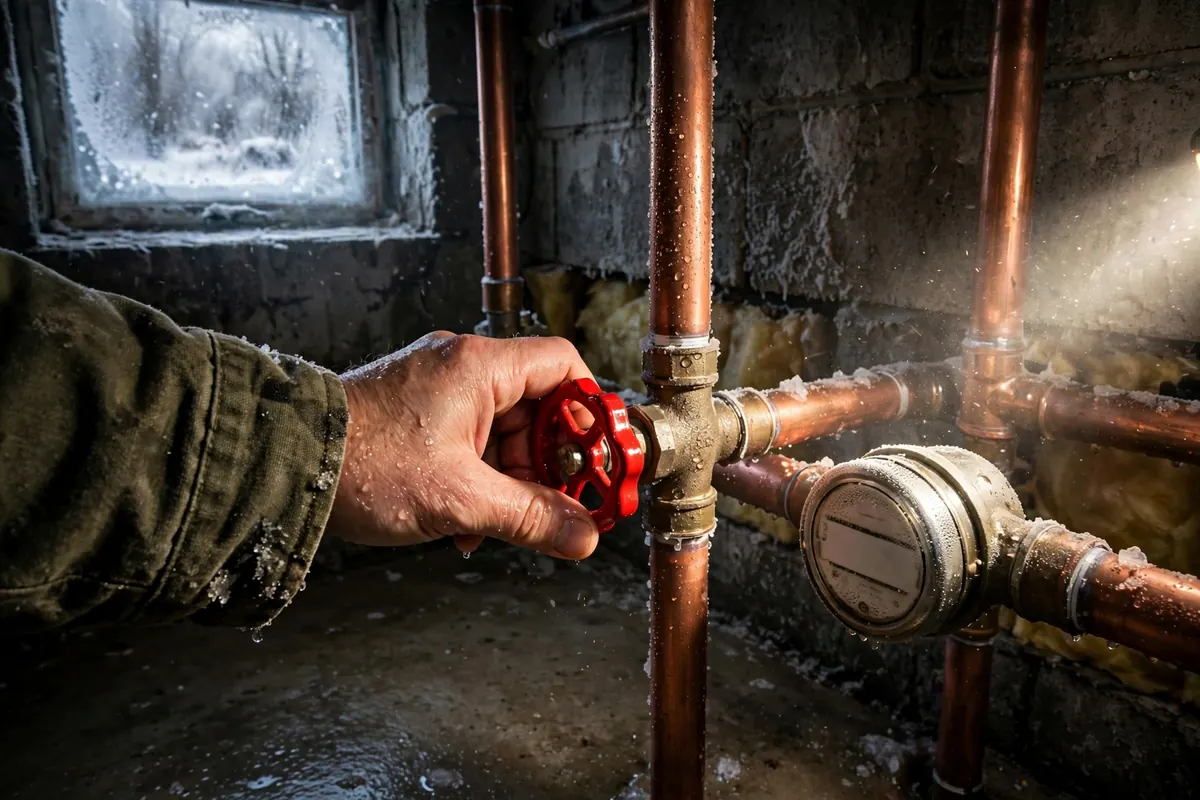
The first step is always the same, and it comes before anything else: shut off the main water valve. In most Harrisburg rowhomes and older borough houses it is in the basement on the front wall, where the water service enters from the street, close to the meter. In a post-war ranch it is more often in a utility room or near the water heater. Turn it clockwise until it stops. The water will stop ru
Step 1: Shut off the main — right now
The first step is always the same, and it comes before anything else: shut off the main water valve. In most Harrisburg rowhomes and older borough houses it is in the basement on the front wall, where the water service enters from the street, close to the meter. In a post-war ranch it is more often in a utility room or near the water heater. Turn it clockwise until it stops. The water will stop running, and the damage will stop growing. If you do not know where the main is, find it now — in October, when the basement is dry and the lights are on — not in January, in the dark, with water running. Make sure the valve turns, and make sure everyone in the household knows where it is. A main shutoff that has not been turned in twenty years can seize, and the time to discover that is not during a burst.
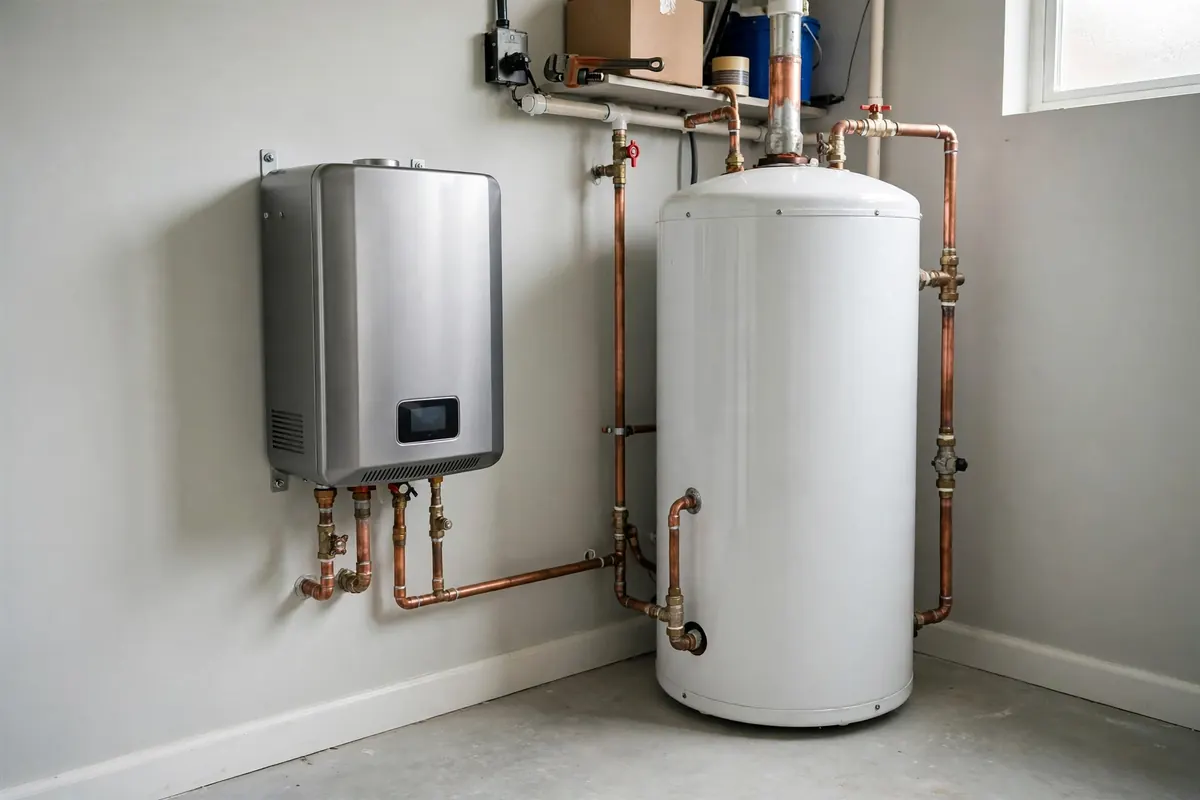
If the burst is at the water heater, there is a second shutoff: the cold-water valve on the line into the heater, usually on top of the tank. Shutting it stops the water to the heater. But the main is the step that matters, because it stops the water to the whole house. Do not waste the first minutes looking for the leak — shut the main first, and look for the leak after the water has stopped.
Step 2: Stay safe — water and electricity
If water is near outlets, the electrical panel, or any electrical equipment, stay out of the room and call from a dry place. Water and electricity together are a safety issue, not a plumbing inconvenience, and stepping into standing water near a panel is the one mistake that turns a plumbing emergency into something worse. If the water is coming through a ceiling, stay out from under it — a ceiling saturated with water can come down, and the weight of the water is not visible from below. If the burst is in a room with a gas appliance, and you smell gas, leave the house and call from outside. The safety steps come before the cleanup, and they come before the photos.
Once the water is off and the room is safe, the next step is to stop the spread. Move valuables, rugs, electronics and furniture out of the water path if it is safe to do so. Open the taps at the lowest point in the house to drain the remaining water from the lines, and open the taps at the highest point to let air in so the lines drain. Put buckets under the leak if it is still dripping from the residual water in the lines. The goal in these minutes is not to fix the pipe — it is to limit the water's reach while help is on the way.
Step 3: Make the call — what to say
Call, and say four things: where the water is, whether it is clean or sewage, whether any tap still runs, and whether the water heater or any electrical equipment is involved. Those answers decide what equipment comes to the door and how urgent the dispatch is. Say where the main shutoff is and whether it is off. Say when the burst started, if you know, and whether it followed a freeze — a tap that ran dry during a cold snap and a leak that appeared as the temperature rose is the classic freeze-burst sequence, and it tells the professional where to look. Say whether the burst is visible — in a basement, a utility room — or hidden inside a wall or above a ceiling, because a hidden burst takes tracing and a careful opening.
Do not wait to see if the leak stops. A leak that slows when the tap is off has not fixed itself; it has only paused, and the water inside the wall keeps spreading through drywall and framing. Do not try to thaw a frozen pipe before checking for a split, and do not use a torch or an open flame — gentle heat from a hair dryer on low, with the tap open, is the safe method, and only when the pipe has not split. The frozen pipe thawing page explains safe thawing, and the emergency plumber page explains what counts as an emergency and what happens from the moment you call.
Step 4: What happens when help arrives
The work starts with finding the failure: tracing the line from the shutoff, checking the meter, and opening the smallest access needed. A burst that is visible in a basement is found quickly; a burst inside a wall takes tracing and a careful opening. The split section is cut out, and the pipe is inspected on either side of the split — a freeze stresses the pipe along its length, so the replacement covers the damaged section rather than just the visible crack. The new section is matched to the existing system, the joints are made properly, and the system is pressurised slowly with every joint checked. The repaired run is insulated where it is exposed, and the rest of the exposed runs in the house are checked too, because a house that froze in one place has the same exposure elsewhere.
The visit ends with the protection, not just the repair. The repaired run is insulated, the air leaks that let cold air reach the pipe are sealed, and the homeowner is shown where the freeze happened so the same spot can be watched on the next cold night. Inside the City of Harrisburg, pipe replacement needs a permit and a city-registered master plumber, and the permit is handled as part of the permanent repair. The burst pipe repair page explains the repair in full.
Step 5: After the water stops — drying and the next freeze
Once the pipe is repaired, the water that already escaped still needs dealing with. The drying is a separate job from the pipe repair, and it starts with removing the standing water, then drying the structure — the drywall, the framing, the flooring — before mould and rot set in. A stain that looks dry on the surface is often wet behind it, and the drying takes longer than the repair. Take photos of the damage for your own records before cleanup starts, and keep them with the house records. The repair and the drying are handled in sequence: stop the water, repair the pipe, then deal with the structure.
The last step is the one that prevents the next burst. A pipe that froze once will freeze again in the same place unless something changes, and the change is fitted at the same visit or in the fall: insulation on the repaired run and the other exposed runs, air sealing around the pipe penetrations, hoses disconnected from outdoor spigots, and the heat kept at a steady temperature during a cold snap. The winterizing guide in the blog has the full fall checklist, so the work is done in October and November rather than in January. Harrisburg's winters will come again — the checklist decides whether the house is ready for them.
Key takeaways
Shut off the main first, stay out of water near electricity, and call. Do not thaw a frozen pipe before checking for a split, and never use a torch. The repair replaces the damaged section and insulates the run, and the protection — insulation and air sealing — is fitted at the same visit, because a pipe that froze once will freeze again in the same place unless something changes.
Talk with a local plumbing professional
Hours: Mon–Fri 7:00 AM–10:00 PM ET · Sat 8:00 AM–10:00 PM ET · Sun 7:00 AM–9:00 PM ET
Call Now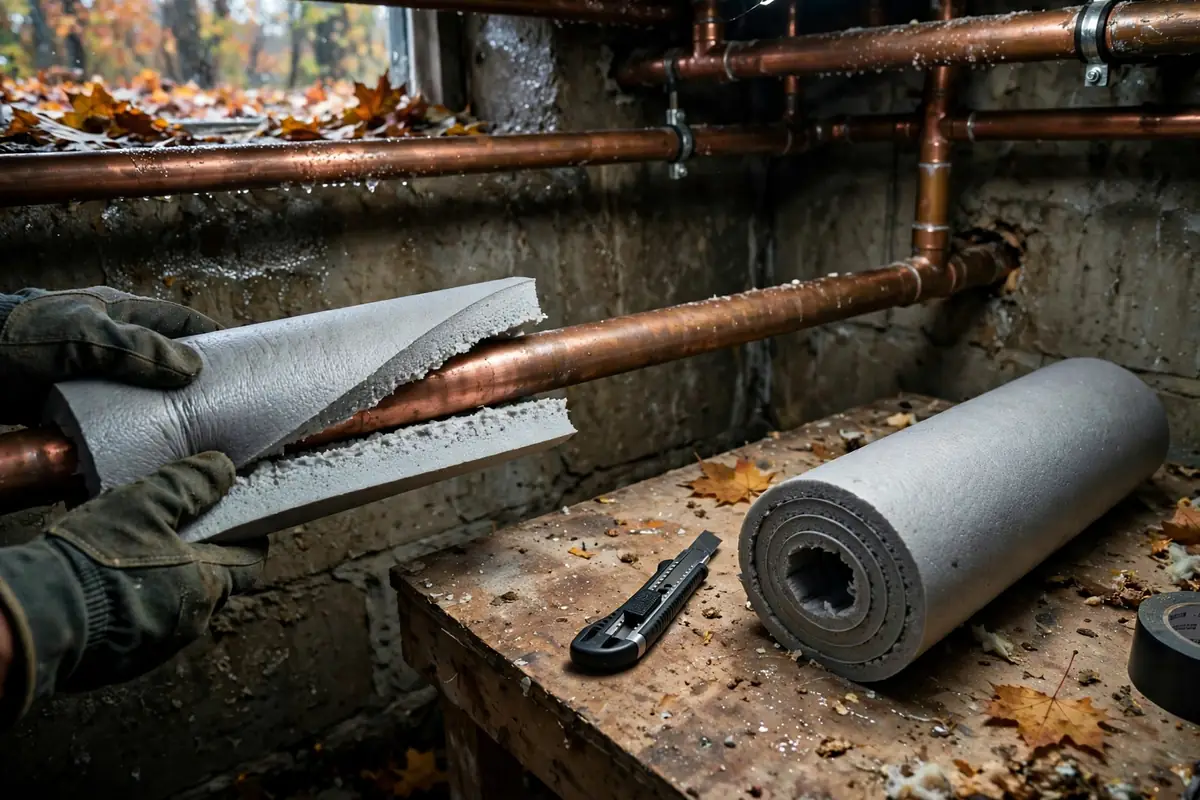
Questions, answered
What do I do in the first minutes of a burst pipe?
Shut the main off, stay out of water near outlets or the panel, and call. Move valuables out of the water path if it is safe to do so, and take photos of the damage for your own records before cleanup starts.
Is standing water near the panel dangerous?
Yes. Stay out of the room and do not step into standing water near outlets or the panel. Call from a dry room. Water and electricity together are a safety issue, not a plumbing inconvenience.
When exactly does a frozen pipe split?
While it is frozen. The expanding ice cracks the pipe wall, and the crack stays sealed by ice until the thaw. The water starts running the moment the ice melts, which is why a tap that ran dry during a freeze and a leak the next morning are the same event.
Should I try to thaw a frozen pipe myself?
Yes, with gentle heat — a hair dryer on low, with the tap open — and only after checking for a split. Never use a torch or an open flame, and shut the main off first if you are unsure.
How fast does burst-pipe damage grow?
A single split pipe can release hundreds of gallons per hour into walls, ceilings and finished basements, and the damage grows with every minute the main stays open. That is why the shutoff comes first, before anything else.
Does fixing a burst pipe prevent the next one?
Only if the protection is fitted with the repair. Insulation and air sealing are part of the job, because a pipe that froze once will freeze again in the same place unless something changes.
Questions about your plumbing? Call Now.
Talk with a local plumbing professional about your home. Hours: Mon–Fri 7:00 AM–10:00 PM ET · Sat 8:00 AM–10:00 PM ET · Sun 7:00 AM–9:00 PM ET.
Call NowGet in touch
Call Now from any page and you will be connected with a local plumbing professional serving Harrisburg and the surrounding metro. You can also reach us by email at hello@harrisburgplumbingpros.com.
Hours: Mon–Fri 7:00 AM–10:00 PM ET · Sat 8:00 AM–10:00 PM ET · Sun 7:00 AM–9:00 PM ET.
Call Now