Home › Blog › Signs Your Home Needs Repiping
Guide · Harrisburg, PASigns Your Home Needs Repiping
Repiping is the decision to stop repairing an old plumbing system one leak at a time and replace the supply lines instead. It is a planned job, not an emergency one, and it is made when the pattern is clear — repeated leaks, falling pressure, rust-coloured water — rather than when the next leak arri
Talk with a local plumbing professional
Hours: Mon–Fri 7:00 AM–10:00 PM ET · Sat 8:00 AM–10:00 PM ET · Sun 7:00 AM–9:00 PM ET
Call NowPublished 2026-11-17 · Harrisburg Plumbing Pros · Harrisburg, PA
Repiping is the decision to stop repairing an old plumbing system one leak at a time and replace the supply lines instead. It is a planned job, not an emergency one, and it is made when the pattern is clear — repeated leaks, falling pressure, rust-coloured water — rather than when the next leak arrives. This guide is the list of the signs that a Harrisburg home needs repiping, what the work involves, and how the decision is made. The context is local: the median Harrisburg home was built in 1947, and the galvanized steel supply lines in those homes have been corroding from the inside for generations.
The short version
A home that has leaked in the kitchen and then in a bathroom, in different years, is showing the condition of the whole system. Each leak is a warning about the lines that have not leaked yet. The corrosion that caused the first leak is present along the whole line, because galvanized steel corrodes from the inside along its entire length — and the next leak is already forming a few feet down the
Sign 1: Two or more leaks in different places
A home that has leaked in the kitchen and then in a bathroom, in different years, is showing the condition of the whole system. Each leak is a warning about the lines that have not leaked yet. The corrosion that caused the first leak is present along the whole line, because galvanized steel corrodes from the inside along its entire length — and the next leak is already forming a few feet down the same line. A single leak in a sound copper line is a repair: cut out the split section, replace it, and the line serves for years. Two leaks in different places in a galvanized system are a repipe, because the pattern is the system, not the spot. A home that has had its third leak is a home that has already paid for a significant part of a repipe in repairs, and the repipe ends the pattern rather than continuing it.
The history is the evidence. Keep a record of every leak: when it happened, where it was, and what was repaired. The record is what the repipe decision is built on, and it is the most useful thing the homeowner brings to the first visit. A provider who asks for the history is working from your house rather than from a square-foot figure, and the history is what separates a system-wide problem from a single failure.
Sign 2: Water pressure falling across the house
Galvanized lines corrode from the inside, and the corrosion narrows the pipe until the flow drops at every tap. A pressure drop that affects the whole house, with no work on the supply, is a system-wide narrowing — and it does not improve. The pressure falls a little each year, until the shower is a trickle and the washing machine takes twice as long to fill. A pressure drop at a single tap is a fixture problem: a clogged aerator, a failed cartridge, or a shutoff that is partly closed. A pressure drop at every tap is a system problem, and the system problem in Harrisburg is usually the galvanized lines. The low water pressure page explains the diagnosis, and the test is the pattern: one tap is a fixture, every tap is the system.
The narrowing is not visible from the outside. The pipe looks the same on the outside as it did when it was installed, and the corrosion is on the inside, where the water flows. The only way to know the condition of the line is by its symptoms — the falling pressure, the discoloured water, the leaks — and by its age. A pre-1970 Harrisburg home with original galvanized supply lines and low flow at every fixture is a repipe candidate, and the flow will not improve without replacement.
Sign 3: Rust-coloured or discoloured water
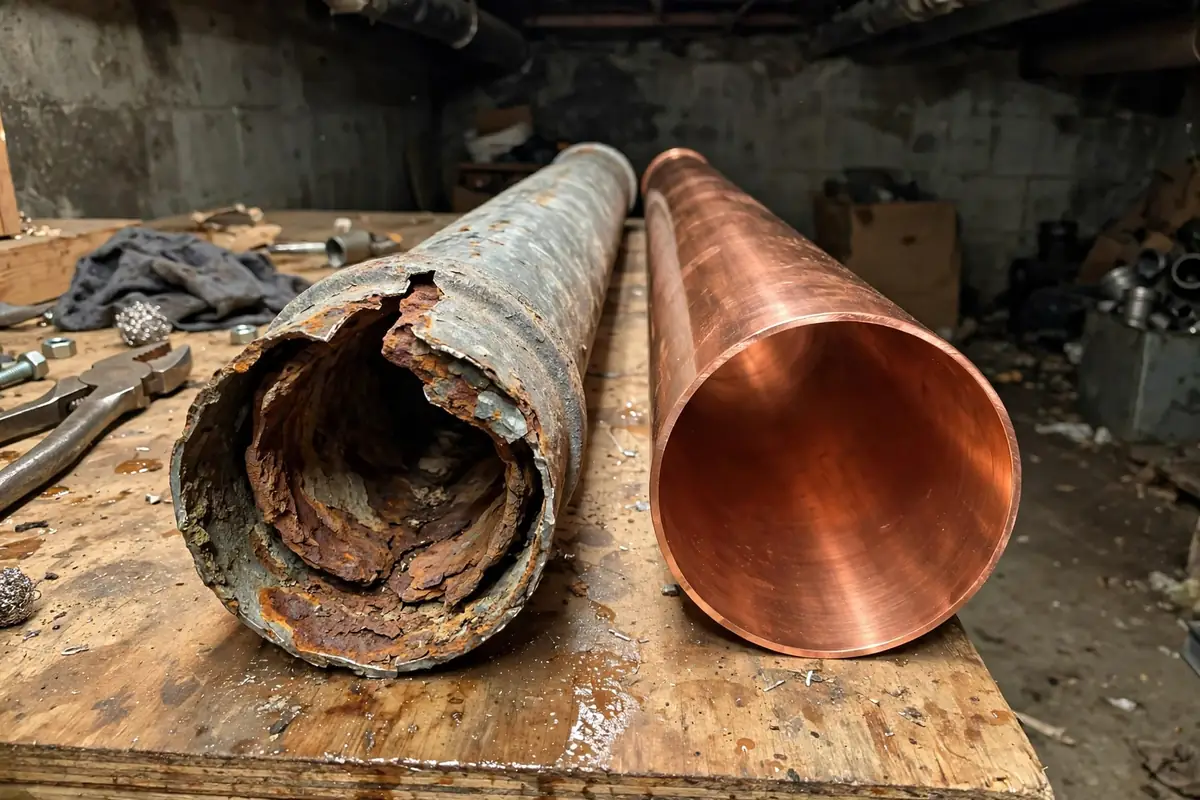
Rust colour in both hot and cold water points to corrosion in the supply lines themselves. Rust only in the hot water points to the water heater; rust in both points to the pipes. The discolouration is the pipe wall entering the water — the galvanized coating has failed, the steel underneath is corroding, and the corrosion products are in the tap water. Water that tastes metallic or looks discoloured is the same sign, and it is the sign that the lines are not just narrowing but shedding material into the water the household drinks, cooks with, and bathes in.
The discolouration is often worst first thing in the morning, after the water has sat in the lines overnight, and it clears after the taps have run for a minute. That pattern — worse after sitting, better after running — is the signature of corrosion inside the lines, and it is worth a call while the lines are still holding water. A line that is shedding rust into the water is a line that is thinning, and a thinning line is a line that will leak.
Sign 4: A home with galvanized lines and low flow
A pre-1970 Harrisburg home very likely has galvanized supply lines. Galvanized pipe is grey, magnetic, and joined with threaded fittings, and it was the standard material for the houses built in the 1940s and 1950s. The lines have been narrowing for decades, and the flow will not improve without replacement. The age alone is a cause: the pipe has simply been in service too long, and the materials were not designed for the span they have served. A home whose lines are older than its owner, with low flow and a history of leaks, is a home whose repipe decision has already been made by the pipes — the only question is whether the work is planned, or whether it arrives as the next emergency.
The remodel is the natural moment. A kitchen or bathroom remodel that opens the walls is the moment to repipe, because the access is already there. Replacing the lines while the walls are open costs far less than opening them again later, and the new lines are routed for the house as it stands today — out of unheated and freeze-prone spaces, with new shutoffs at every fixture and a new main shutoff at the entry. The repiping page explains the work in detail, including the choice between PEX and copper.
What repiping involves — and what it does not
Whole-home repiping replaces the hot and cold supply lines that carry water to every fixture in the house — the lines inside the walls, under the floors, and through the basement or crawl space. The old lines are abandoned in place or removed where they are accessible, and new lines are run in copper or PEX, with new shutoffs at each fixture and a new main shutoff at the entry. The drain and sewer lines are a separate system and are not part of a repipe unless they are failing too. The house is repiped in sections — one bathroom, one kitchen — so the home stays liveable, and water is shut off to one section at a time rather than to the whole house at once.
PEX is flexible, runs in long lengths with fewer joints, resists freeze damage better than rigid pipe, and is often the faster install in a finished home because it can be fished through walls with fewer openings. Copper is rigid, durable, and familiar, and it is the right choice for straight runs and exposed lines. The choice is made by the house — its layout, its access, and the freeze exposure — not by a preference formed before anyone has seen the runs. Inside the City of Harrisburg, the work needs a permit and a city-registered master plumber, and the permit is part of the job.
The decision: repair, partial repipe, or whole-home repipe
One leak in a sound copper line is a repair. A single bathroom run that has failed, in a house where the rest of the system is sound, is a partial repipe — that section is replaced while the rest is left in place. Two or more leaks in different places, falling pressure across the house, or discoloured water from corroded lines is a whole-home repipe, because the pattern is system-wide. The test is the pattern, and the pattern is in the history: the leaks, the pressure, the water. A provider who maps the system before recommending the work — where the lines run, what they are made of, where the shutoffs are — is working from your house, and the map is what the scope is built on. Ask whether the work includes new shutoffs, wall closing, and the permit, and ask how the house stays liveable during the work. The provider who answers those questions with a plan for your house is the one whose repipe will be finished on schedule and without surprises.
Key takeaways
The pattern is the decision: two or more leaks in different places, falling pressure across the house, or rust-coloured water at the taps. One leak in a sound line is a repair; a pattern of leaks is a repipe. The choice between PEX and copper follows the house — its layout, access, and freeze exposure. And a remodel that opens the walls is the natural moment to repipe, because the access is already there.
Talk with a local plumbing professional
Hours: Mon–Fri 7:00 AM–10:00 PM ET · Sat 8:00 AM–10:00 PM ET · Sun 7:00 AM–9:00 PM ET
Call Now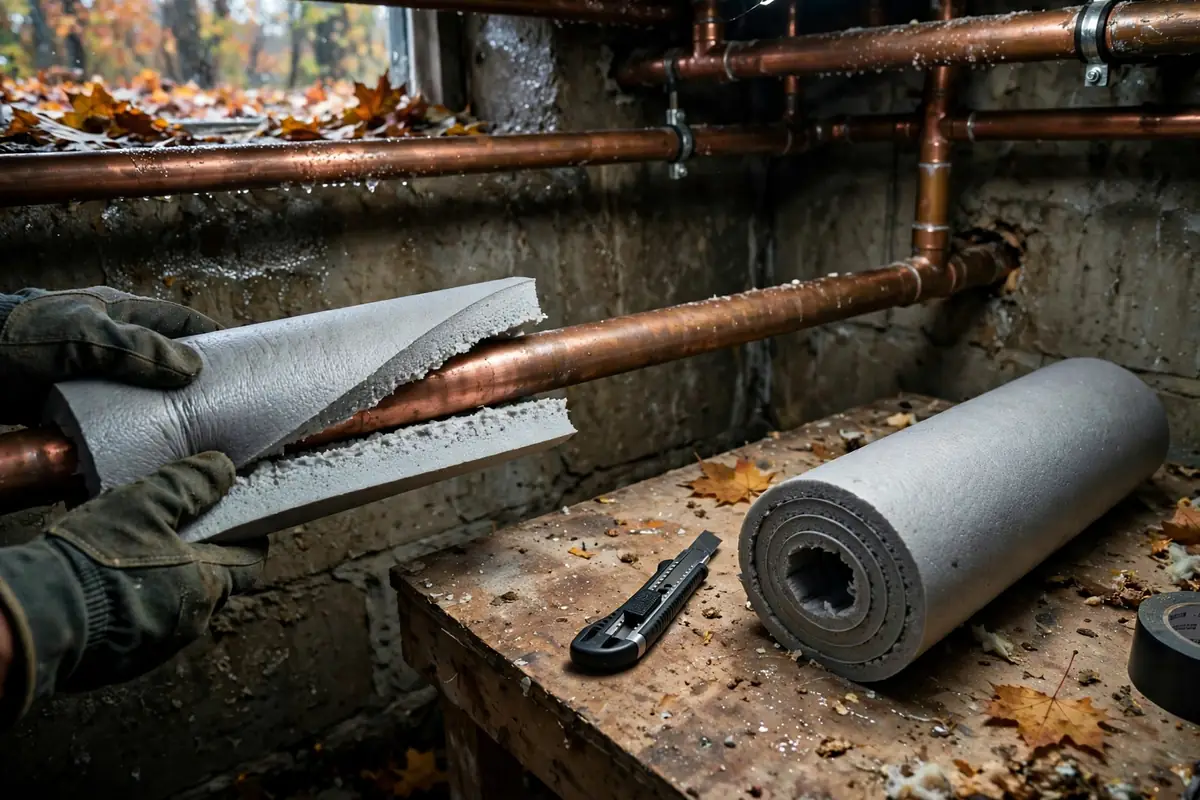
Questions, answered
At what point do repairs stop making sense?
When the pattern is system-wide: two or more leaks in different places, falling pressure across the house, or discoloured water. One leak in a sound line is a repair; a pattern of leaks is a repipe, because the corrosion is in every line, not one.
PEX or copper — which suits an older Harrisburg home?
PEX is flexible, runs in long lengths with fewer joints, and resists freeze damage better — often the faster install in a finished home. Copper is rigid and durable, and fits straight runs and exposed lines. The house decides, not a preference formed before anyone has seen the runs.
How disruptive is a whole-home repipe?
The work is done in sections — one bathroom, one kitchen — so the home stays liveable. Water is off to one section at a time, not the whole house at once, and each new run is pressure-tested as it is installed.
Can new pipes restore my water pressure?
If the low pressure is caused by corroded galvanized lines narrowing from the inside, yes — new lines restore the flow the house was built with. If the cause is the municipal supply, a repipe will not change it.
What permits does repiping need in the city?
Inside the City of Harrisburg, pipe installation or replacement needs a permit and the work must be done by a city-registered master plumber. The Bureau of Codes handles permits, and the permit is part of the job.
How can I tell what my supply lines are made of?
Galvanized pipe is grey, magnetic, and joined with threaded fittings — and a pre-1970 Harrisburg home very likely has it. Low flow and rust-coloured water are the symptoms that confirm it.
Questions about your plumbing? Call Now.
Talk with a local plumbing professional about your home. Hours: Mon–Fri 7:00 AM–10:00 PM ET · Sat 8:00 AM–10:00 PM ET · Sun 7:00 AM–9:00 PM ET.
Call NowGet in touch
Call Now from any page and you will be connected with a local plumbing professional serving Harrisburg and the surrounding metro. You can also reach us by email at hello@harrisburgplumbingpros.com.
Hours: Mon–Fri 7:00 AM–10:00 PM ET · Sat 8:00 AM–10:00 PM ET · Sun 7:00 AM–9:00 PM ET.
Call Now