Home › Blog › Sump Pump Failure Signs: What to Watch Before Spring Thaw
Guide · Harrisburg, PASump Pump Failure Signs: What to Watch Before Spring Thaw
A sump pump fails on the worst day of the year. It sits idle all winter, and it is asked to work at full capacity on the first warm weekend of spring, when the thaw and the rain raise the water table across the Susquehanna valley and the basement takes water. The pump that has not run since November
Talk with a local plumbing professional
Hours: Mon–Fri 7:00 AM–10:00 PM ET · Sat 8:00 AM–10:00 PM ET · Sun 7:00 AM–9:00 PM ET
Call NowPublished 2026-11-17 · Harrisburg Plumbing Pros · Harrisburg, PA
A sump pump fails on the worst day of the year. It sits idle all winter, and it is asked to work at full capacity on the first warm weekend of spring, when the thaw and the rain raise the water table across the Susquehanna valley and the basement takes water. The pump that has not run since November is the pump most likely to fail in April — and the failure is discovered by a flooded basement, not by a warning light. This guide is the list of the failure signs, the spring test that finds them, and the backup that matters on the worst night.
The short version
Harrisburg's water problem is seasonal and predictable. Spring thaw brings melting snow and ice that overwhelm drainage, and heavy rain raises the water table across the river valley. A basement that is dry all winter can take water in a single April weekend, and the pump that has not run since November is asked to work at full capacity on the first day it matters. A frozen discharge line, a stuck
Why spring is the failure season
Harrisburg's water problem is seasonal and predictable. Spring thaw brings melting snow and ice that overwhelm drainage, and heavy rain raises the water table across the river valley. A basement that is dry all winter can take water in a single April weekend, and the pump that has not run since November is asked to work at full capacity on the first day it matters. A frozen discharge line, a stuck float switch, or a pump that has seized from sitting idle are the three failures that arrive together in spring — and they arrive together because the pump has been idle for months, the discharge line has been frozen, and the float switch has been sitting in the same position since the last time the pit filled.
The river shapes the load. The Susquehanna runs along the city's western edge, and the water table across the river valley rises with thaw and rain. Shipoke, on the riverfront, sits entirely in the floodplain and has taken river water in 1972, 2004 and 2011. Lemoyne and New Cumberland, on the West Shore beside the river and the Yellow Breeches Creek, carry the same high water table. Sloped lots and poor exterior grading add to the load: water runs toward the house instead of away from it, and the sump system carries what the grading should have shed. The sump pump page explains the system in full.
The signs: what to look and listen for
A pump that runs constantly is the first sign. A pump that never stops is working against a problem: a check valve that has failed and lets water flow back into the pit, a discharge line that is blocked, or a water load that has grown beyond the pump's capacity. Constant running wears the pump out, and the failure follows soon after. A pump that never runs is the second sign: while water rises in the pit, the pump stays silent, and the cause is a failed float switch, a seized motor, a tripped breaker, or a power problem. A pump that has sat idle all winter is the most likely to seize, and the spring test is what finds it.
Noise is the third sign. A pump that grinds, rattles or vibrates is wearing out — a failing bearing, a damaged impeller, or a pump running dry because the float switch is set wrong. A musty smell or damp walls in the basement is the fourth: persistent dampness, a musty smell, or efflorescence on basement walls means groundwater is entering faster than the sump system is removing it, and the system is undersized, failing, or missing entirely. Water in the basement after rain or thaw is the fifth, and it is the failure itself: the pump is failing, the discharge is blocked, or the water load is larger than the system was built for.
The spring test: two minutes that prevent a flood
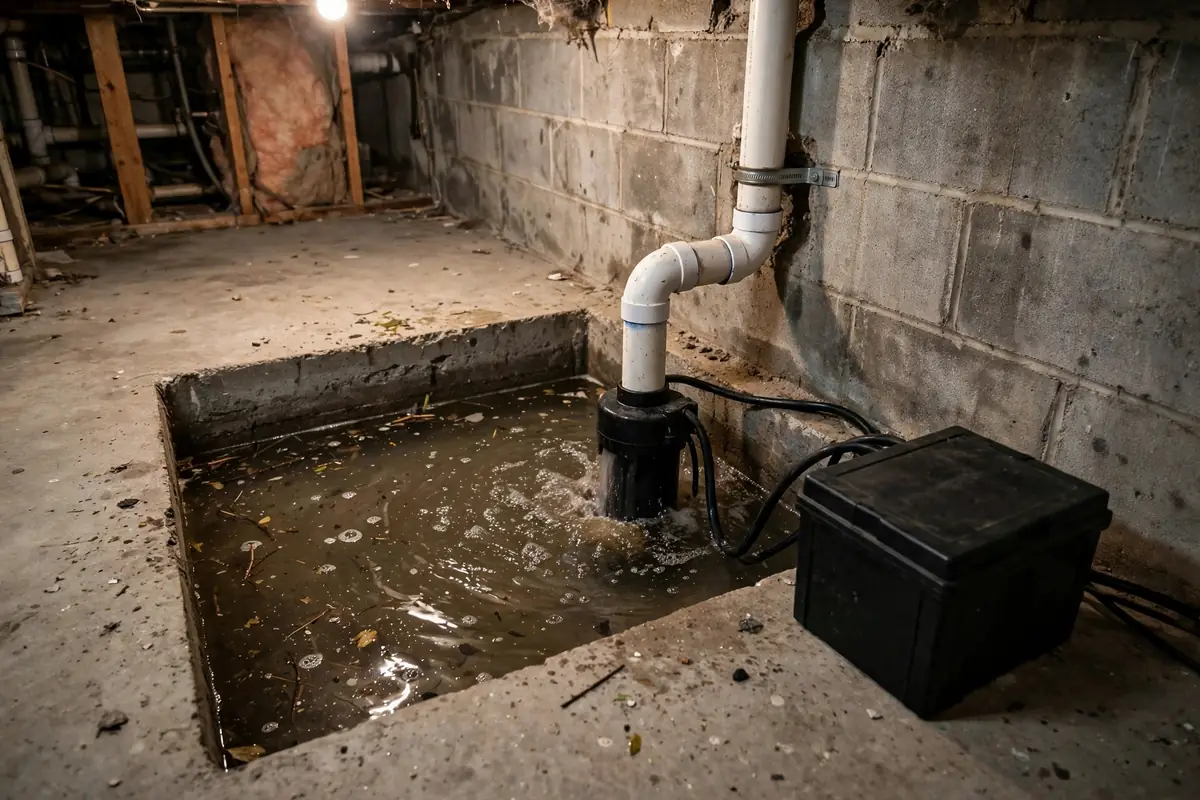
The spring test takes two minutes, and it is worth doing every spring, before the thaw. Pour water into the pit — a bucket at a time — and watch the pump. It should start as the water rises, run steadily, and stop when the pit is empty. The float switch should move freely, without sticking on the pit wall or tangling on the discharge line. The discharge should carry water away from the house, and the check valve should stop the water from flowing back into the pit when the pump stops. If the pump does not start, if it starts and does not stop, if it grinds or vibrates, or if the water comes back into the pit after the pump stops, the system has a failure — and the failure is found in spring, while there is still time to fix it, rather than in April, when the basement is flooding.
The test also covers the discharge line. Trace it from the pump to its termination, and check that it is clear, that it slopes to drain, and that the water goes away from the house rather than beside the foundation. A discharge line that ends beside the house sends the water straight back into the ground around it, where it returns to the pit. A discharge line that runs above ground or through an unheated space freezes in winter, and the pump cannot push water through ice. The line must be sloped to drain and protected from freezing, and the termination must carry the water away from the house.
The backup: the part that matters on the worst night
Heavy rain and power cuts arrive together, and a sump pump without backup power stops exactly when the water load is highest. A battery backup keeps the pump running when the power goes out, and it is the part of the system that matters most on the worst night of the year. A water-powered backup is the alternative where the municipal supply is reliable: it uses the water pressure to pump, and it needs no battery and no power. Either way, the backup is tested by cutting the power — the test is what proves it works, not the label on the box. A pump without a backup is a pump that stops when the power goes out, which is when the rain is heaviest and the basement needs it most.
The backup is also the part that decides the repair-or-replace question on the worst night. A pump that has served for a decade in a Harrisburg basement has done its work, and a new pump with a backup is a better investment than another repair on a worn motor. The sump pump page explains the repair and replacement options, and the sizing: the pump must be sized to the water load the house actually sees, not to the average year, and the pit must be sized so the pump does not cycle on and off until the switch wears out.
The maintenance that keeps the system working
The maintenance is simple, and it is the maintenance that is most often skipped. The pit is cleared of debris, the float switch is checked for unobstructed movement, and the pump is tested every spring. The discharge line is checked for freezing and blockage, and the backup is tested by cutting the power. A pump that has served for a decade is near the end of its service life, and the replacement is planned before the failure rather than after the flood. The system is only as strong as its weakest part — the pump, the pit, the check valve, the discharge line and the power supply all have to work, and the failure of any one of them floods the basement just as surely as a failed pump.
Key takeaways
The pump fails in spring, when it is asked to work at full capacity after sitting idle all winter. The spring test — pouring water into the pit and watching the pump start, run and stop — takes two minutes and finds the failure while there is still time to fix it. The backup power is the part that matters on the worst night, because heavy rain and power cuts arrive together. And the discharge line must carry water away from the house, not in a circle beside the foundation.
Talk with a local plumbing professional
Hours: Mon–Fri 7:00 AM–10:00 PM ET · Sat 8:00 AM–10:00 PM ET · Sun 7:00 AM–9:00 PM ET
Call Now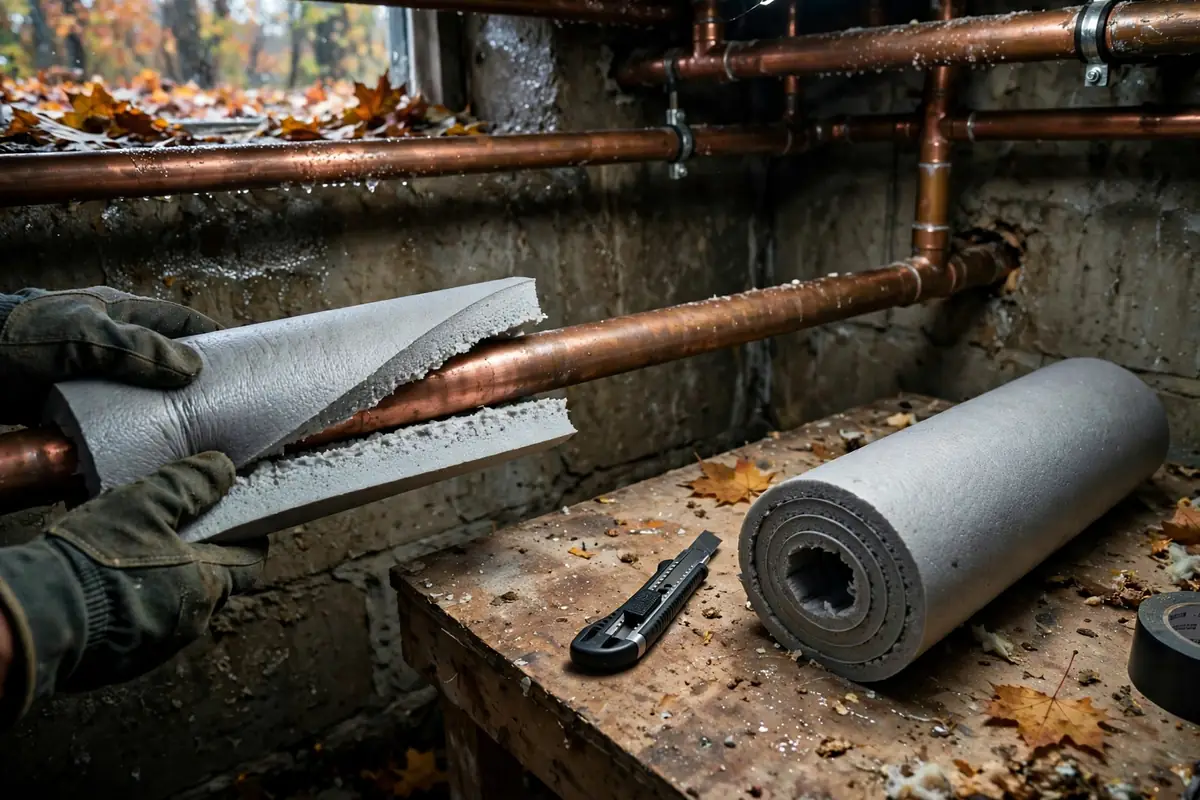
Questions, answered
When is the right time to test a sump pump?
Every spring, before the thaw. A pump that has sat idle all winter is the most likely to fail on the first warm weekend, and the test — pouring water into the pit and watching it start, run and stop — finds the failure while there is still time to fix it.
What makes a sump pump never stop running?
A failed check valve letting water flow back into the pit, a blocked discharge line, or a water load larger than the pump's capacity. Constant running wears the pump out, and the failure follows soon after.
What happens to my sump pump in a power cut?
It stops — and heavy rain and power cuts arrive together. A battery backup keeps the pump running when the power goes out, which is exactly when the water load is highest and the basement needs it most.
Why would a sump pump stop in winter?
Its discharge line can freeze where it leaves the house, and the pump cannot push water through ice. The line must be sloped to drain and protected from freezing, or the system fails even when the pump is working.
What is the part that starts a sump pump?
The float switch rises with the water in the pit and starts the pump. It is the most common point of failure: it sticks, tangles on the pit wall, or its contacts wear out — and a stuck switch is the most common reason a basement floods.
How long does a sump pump last?
A pump that has served for a decade in a Harrisburg basement is near the end of its service life. The spring test is what shows whether it is still working, and the replacement is planned before the failure.
Questions about your plumbing? Call Now.
Talk with a local plumbing professional about your home. Hours: Mon–Fri 7:00 AM–10:00 PM ET · Sat 8:00 AM–10:00 PM ET · Sun 7:00 AM–9:00 PM ET.
Call NowGet in touch
Call Now from any page and you will be connected with a local plumbing professional serving Harrisburg and the surrounding metro. You can also reach us by email at hello@harrisburgplumbingpros.com.
Hours: Mon–Fri 7:00 AM–10:00 PM ET · Sat 8:00 AM–10:00 PM ET · Sun 7:00 AM–9:00 PM ET.
Call Now